Principal seat of authority
French structure foregrounds trained method and institution; the Indigenous comparison foregrounds relationships among community, land, and time; Lebanese structure foregrounds coordination among dishes and diners.
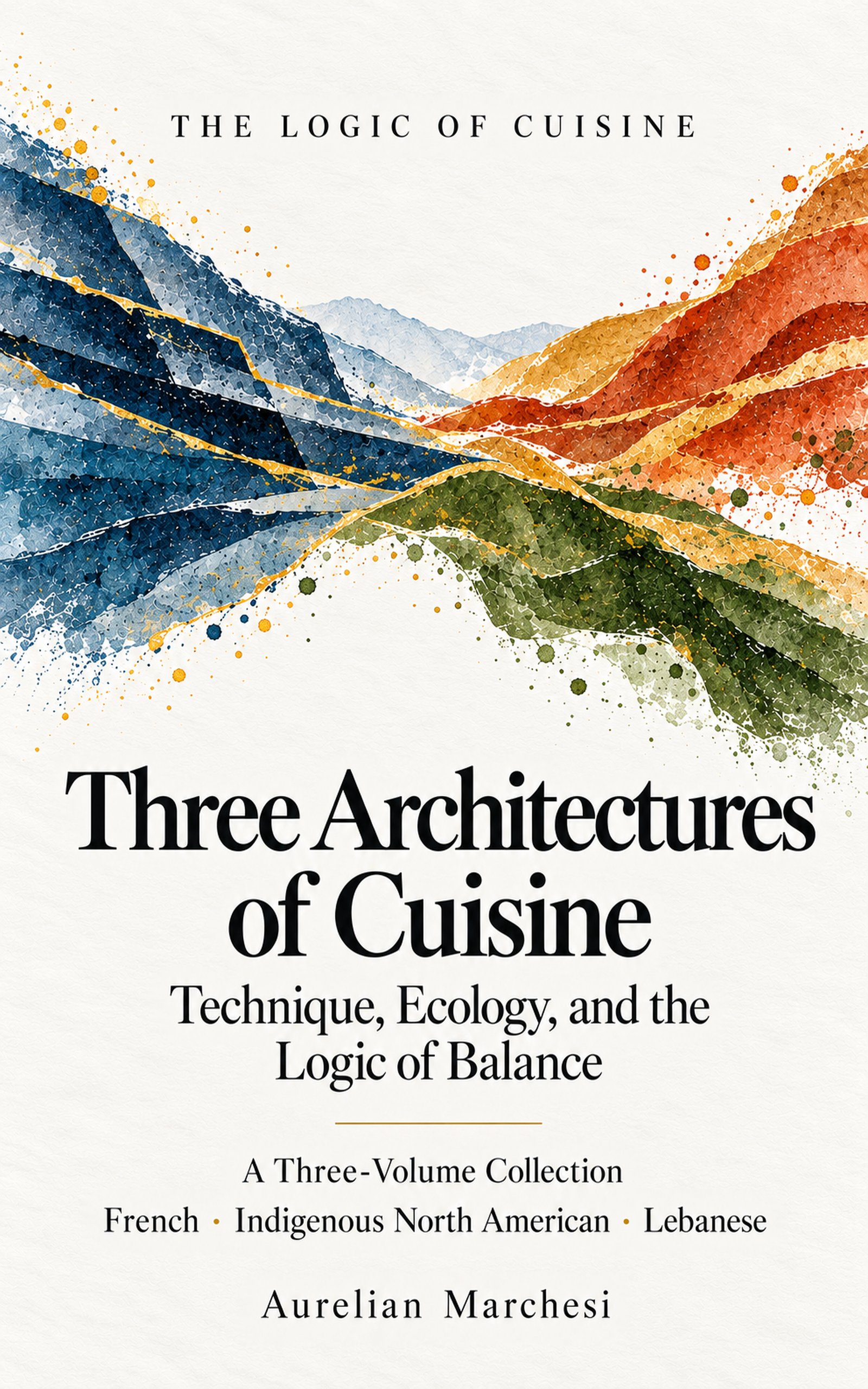
Collection 9 · The Logic of Cuisine
Technique, Ecology, and the Logic of Balance
By Aurelian Marchesi
A polished sauce, a winter store, and a table crowded with small plates appear to belong to unrelated worlds. Three Architectures asks what becomes visible when they are read as answers to pressure rather than as styles. French technique, selected Indigenous North American food systems, and Lebanese shared-plate logic organize unstable materials, difficult seasons, labor, and appetite through different locations of authority. The comparison does not merge them. It reveals how method, responsibility, and distribution can each make repetition coherent.
The collection argues that culinary balance can be built through at least three distinct architectures. French cuisine centralizes control in technique, sequence, stock, sauce, heat, and institutional repetition. Indigenous North American foodways, presented through an explicitly limited comparative lens, join seasonality and preservation to land, continuity, reciprocity, and community responsibility. Lebanese cuisine distributes balance among bread, grains, legumes, olive oil, acid, herbs, dairy, many dishes, and the choices of diners. Each organizes constraint, but each locates culinary intelligence in a different relationship.
Volume 1
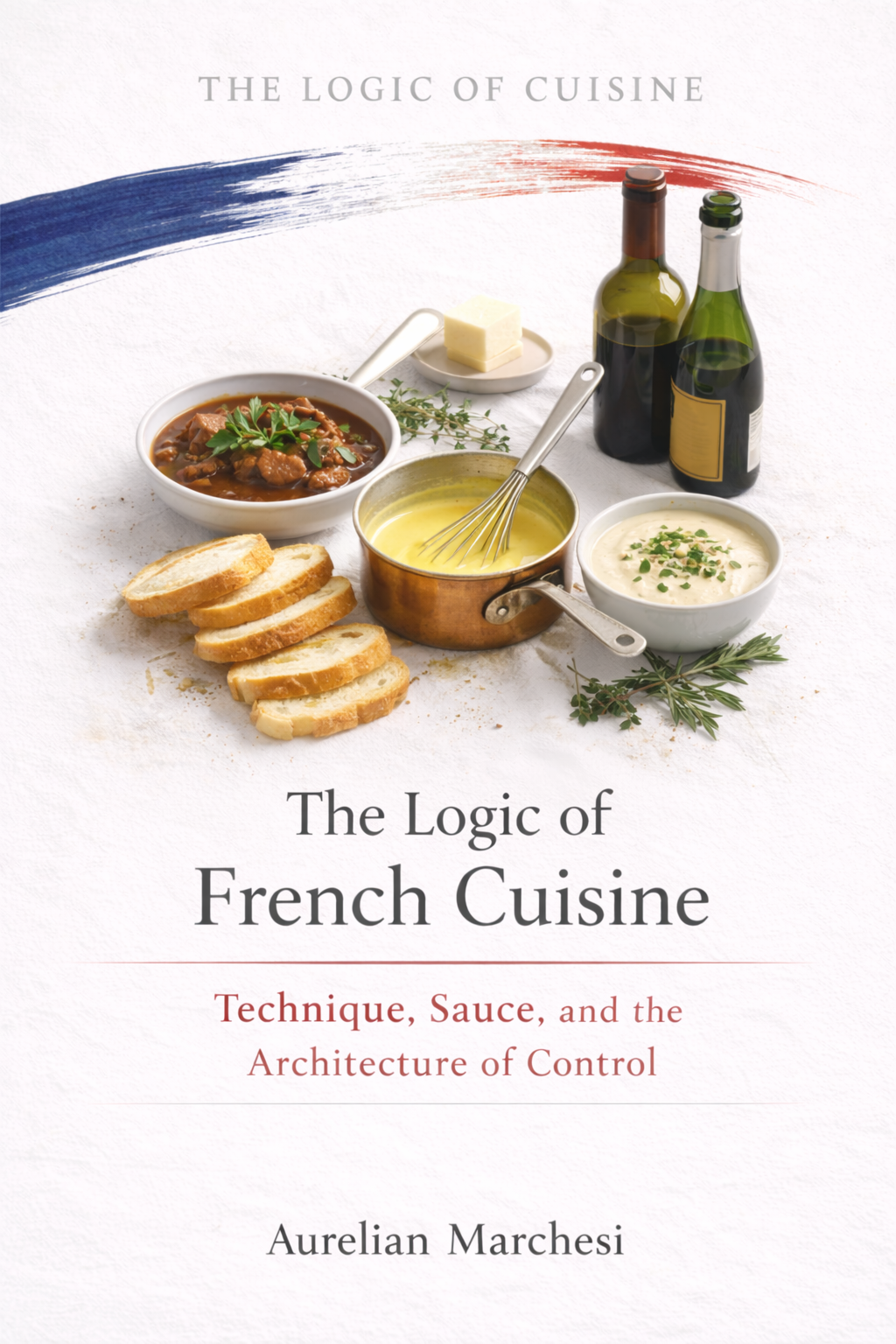
The French volume establishes control through stock, sauce, heat, sequence, matched methods, courses, and professional repetition, making technique the first visible architecture.
The collection then moves beyond kitchen-centered control to systems where season, land, mobility, preservation, community, and obligation define what culinary continuity requires.
Volume 2
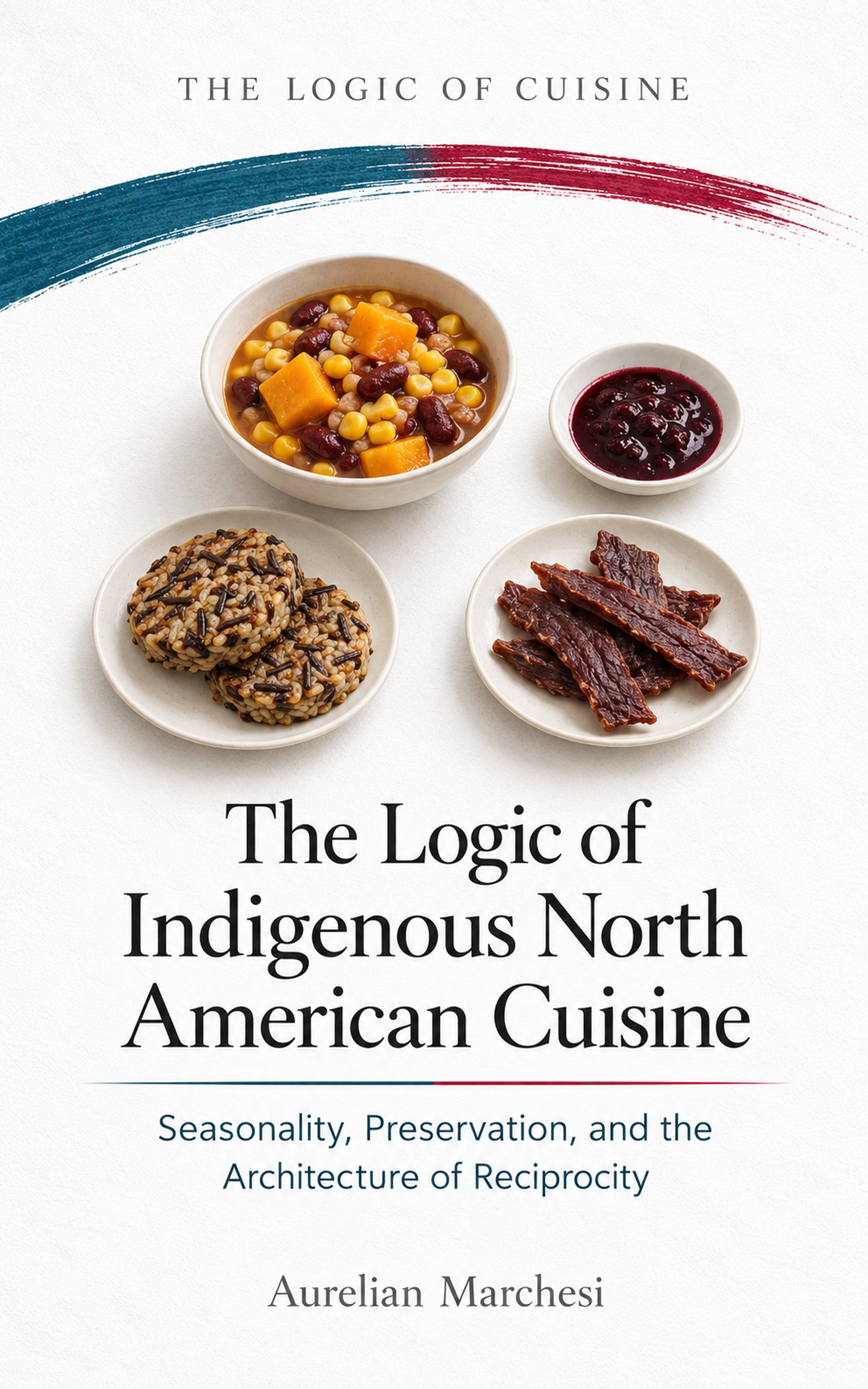
The Indigenous North American volume widens the frame to selected land-specific food systems in which seasonality, preservation, mobility, sharing, and reciprocity connect technique to living continuity.
The final movement returns to the table, now asking how authority can circulate among many dishes and diners rather than remain centered in a method or single vessel.
Volume 3
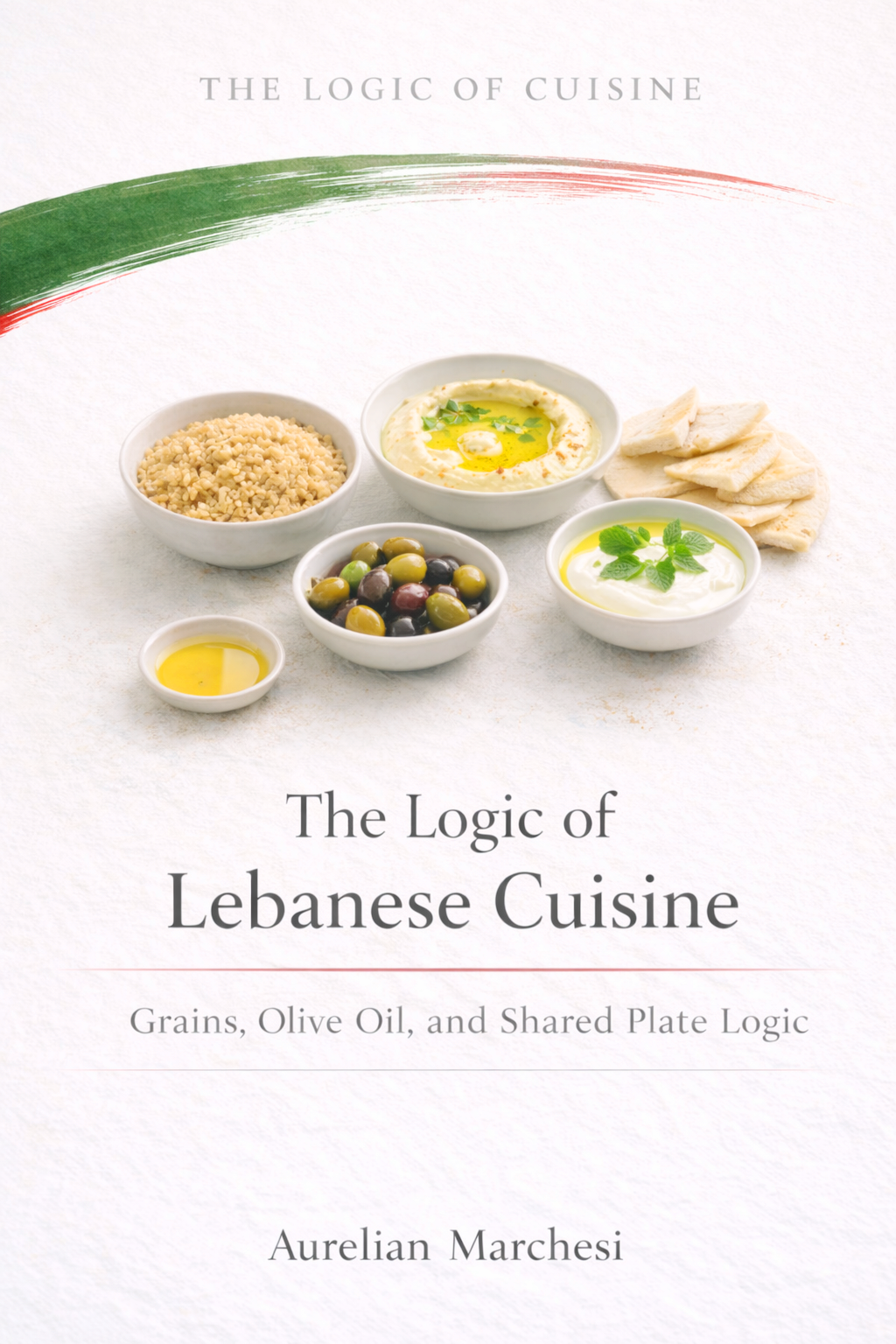
The Lebanese volume completes the sequence through bread infrastructure, staple anchors, olive oil, acid, herbs, dairy, meze, and shared pacing: balance becomes a distributed social achievement.
French structure foregrounds trained method and institution; the Indigenous comparison foregrounds relationships among community, land, and time; Lebanese structure foregrounds coordination among dishes and diners.
Stocks, preparations, and professional sequence store prior work; drying, smoking, keeping, and seasonal knowledge connect abundance to continuity; grains, legumes, preserved elements, and meal pacing distribute durability across the table.
Balance appears as technical adjustment, reciprocal responsibility, or plural regulation, exposing different answers to who or what prevents concentration from becoming domination.
The sequence begins with method made explicit, widens outward to ecological and communal responsibility, and returns to the meal as a distributed field of regulation. This is not a ladder from control to freedom, nor a claim that the three systems are historically linked. It is a deliberate expansion of where culinary intelligence can be located: in trained operations, in reciprocal continuity, and in the relations among many foods and people at a table.
Three Architectures offers a comparison of constraints without a universal formula. Its distinctive proposition is that technique, ecology, and shared distribution are not themes laid over cuisine; they are different ways a food system assigns responsibility for coherence. Reading them together reveals both the reach and the limit of structural comparison, especially where community-held knowledge and living sovereignty require explicit restraint.
The French volume reads refinement as an effect rather than an origin. Stocks store work and time; sauces organize fat and liquid; moderated heat protects texture; cuts are matched to methods; vegetables support the load of a plate; courses regulate appetite. Professional repetition makes judgment transferable across service. Control here is not the elimination of variation, but a technical language for responding to it with clarity, tenderness, and continuity.
The Indigenous North American volume changes the scale of analysis from kitchen command to relationships among season, land, mobility, storage, sharing, and renewal. Its selected examples cannot represent every nation or community, and shared techniques do not erase sovereignty or distinct knowledge. The editorial value lies in the connection it preserves: harvesting, hunting, fishing, gathering, drying, smoking, storing, returning, and transmitting are not isolated techniques when continuity depends on reciprocity.
The Lebanese volume places governance across the meal. Bread carries and gathers; grains and legumes anchor; olive oil creates cohesion; lemon, yogurt, herbs, pickles, and raw vegetables reopen the palate; meat and fried foods become accents in a wider field. Meze is therefore not picturesque abundance. It divides responsibility for satiety, correction, hospitality, and pacing among dishes and diners, preventing any one force from becoming the whole meal.
The comparison follows authority rather than prestige. It asks whether coherence is secured principally through codified method and institution, through reciprocal obligations linking food to place and time, or through distribution among staples, regulators, dishes, and diners. These categories are lenses, not total definitions: technique, ecology, and sharing appear in every cuisine. Their value is to show which relationship the collection foregrounds and what would be lost if a visible dish were separated from the system that sustains it.
This collection makes the series' architectural metaphor answerable to three unlike locations of intelligence. It demonstrates why the individual books remain necessary: a shared vocabulary of pressure and balance cannot replace the particular histories, institutions, ecologies, communities, and table forms each volume studies. The collection provides a disciplined comparison while preserving those boundaries and the Indigenous volume's deliberately limited scope.