Unit of production
The unit of production scales from a portable enclosed meal, to a sustaining plate and hearth rhythm, to a flexible restaurant menu generated from shared professional preparation.
Collection 4 · The Logic of Cuisine
Pasties, Hearths, and the Architecture of Working Food
By Aurelian Marchesi
Working food carries a timetable as surely as it carries nourishment. Across mine, industrial hearth, and restaurant service, food must survive distance, preserve heat, divide fairly, and perform again under pressure.
British working food is not one inherited pantry but an evolving set of architectures for constraint: Cornish pastry makes labour portable, Northern batter, suet, starch, and gravy organize industrial nourishment, and the British curry house turns migration, skilled labour, base gravy, and fast finishing into a repeatable Britain-made cuisine.
Volume 1
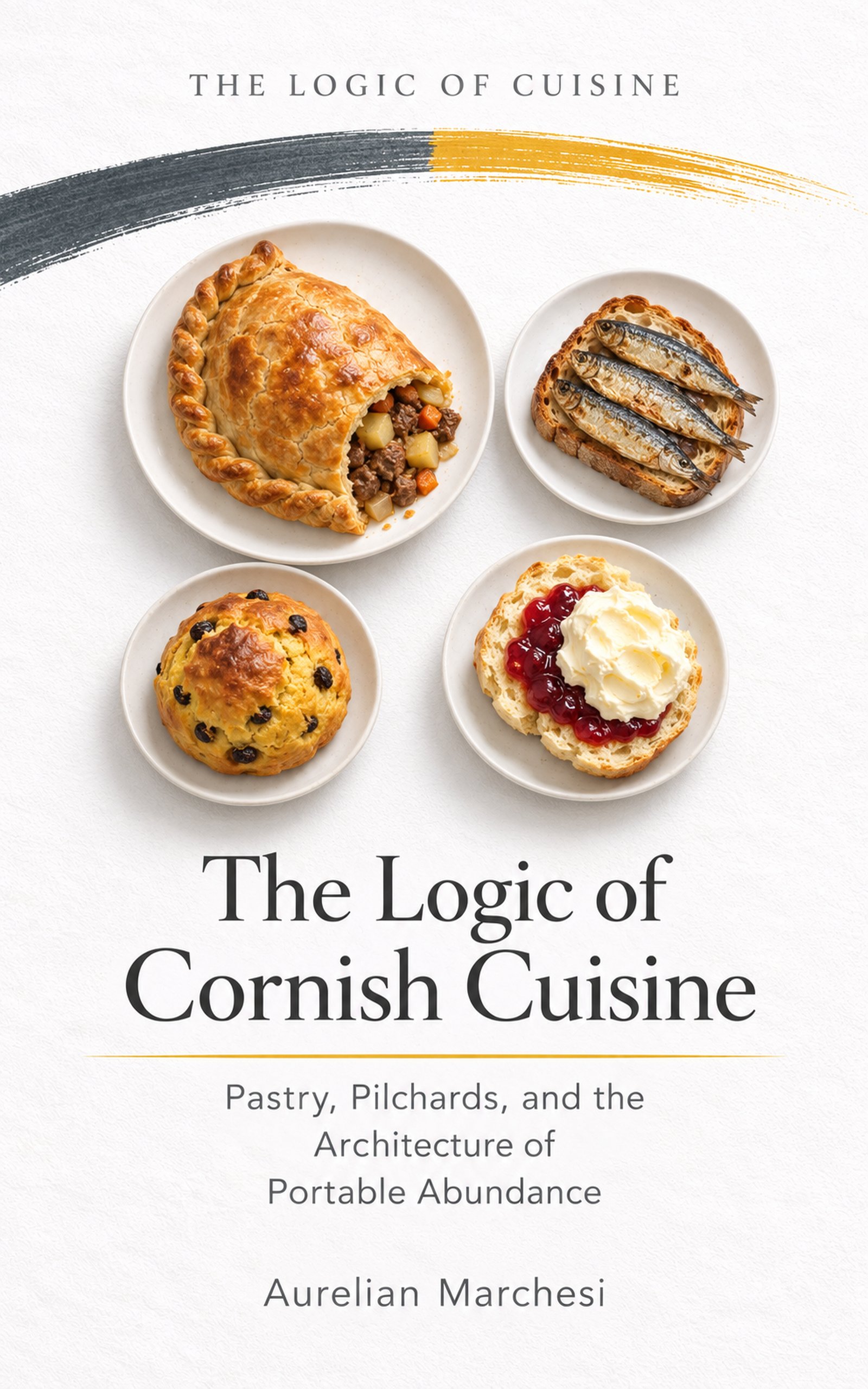
Cornish cuisine establishes the portable unit. Pastry encloses a complete meal able to cross distance between home, mine, coast, work, and appetite while fish and bakery forms connect volatile catch to daily provision.
The sequence moves from one enclosed meal carried by an individual to a regional hearth that must feed repeated household and industrial demand across plates, shifts, and service settings.
Volume 2
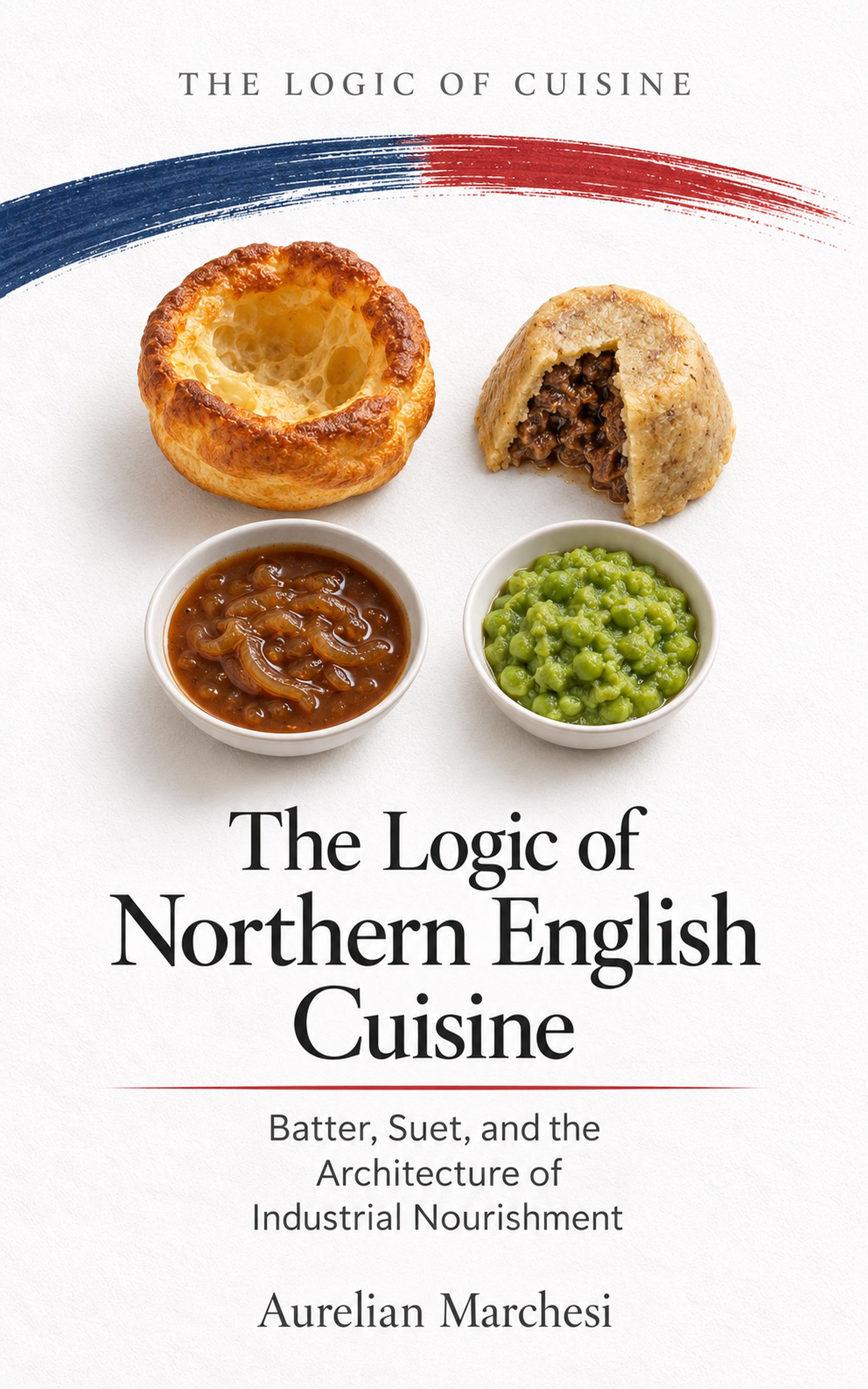
Northern English cuisine expands the problem to the industrial hearth. Batter, suet, starch, gravy, oven heat, and shared service distribute retained warmth across households, pubs, canteens, and working time.
It then moves from hearth-based repetition to professional mise en place, where labour is stored before the order and a shared base must generate recognizable variety quickly for a public dining room.
Volume 3
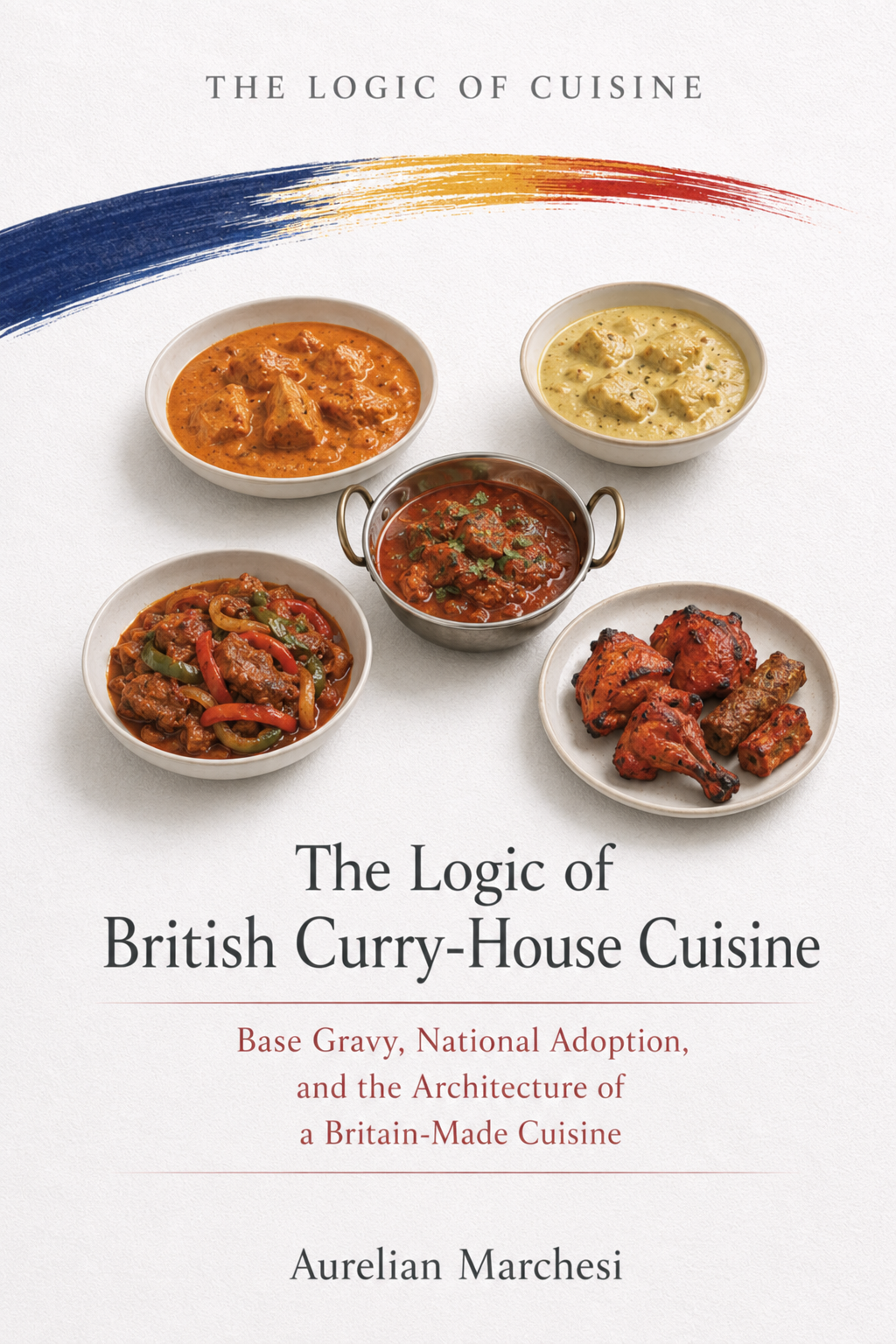
British curry-house cuisine completes the sequence at professional-service scale. Base gravy, batching, fast finishing, carriers, and group ordering let migrant skill produce differentiated dishes at public speed.
The unit of production scales from a portable enclosed meal, to a sustaining plate and hearth rhythm, to a flexible restaurant menu generated from shared professional preparation.
Time is stored respectively in a ready-to-carry crust, in slow transformations and retained hearth warmth, and upstream in base gravy and batching that permit fast finishing during service.
Regional inheritance, industrial adaptation, and migrant restaurant innovation are different routes into public British identity. Comparison clarifies their relation without claiming equivalent histories or ownership.
The ordered collection increases the organizational scale of working food. It begins with a meal engineered for one worker to carry, widens to a hearth system that distributes warmth through industrial and household time, and ends in a professional kitchen that must produce many differentiated dishes at service speed. The progression is not a chronology of improvement. It shows three locations where labour can be stored—enclosure, hearth transformation, and prepared base—and three ways a working form becomes publicly recognizable.
The collection defines British food-making as an active history of work, migration, and adoption rather than a sealed national inheritance, while preserving the distinct production logic of each volume.
Food must fit the work that will receive it. Cornish mine, coast, and distance require a meal able to leave the table, resist handling, hold moisture, and remain substantial after waiting. Northern industrial and household rhythms require warmth and calories to be distributed across plates, shifts, pubs, canteens, and repeated service. The British curry house faces a different pressure: many recognizable dishes must be produced quickly during restaurant demand. Portability, retained heat, batching, and fast finishing are not secondary conveniences. They are production requirements that shape the culinary form before prestige or presentation enters.
Constraint produces durable transformation systems. Cornish pastry encloses and protects a meal, storing work in a robust unit before the eater leaves home. Northern batter expands, suet encloses, starch carries, and gravy reconnects browned or dense components so warmth can be shared rather than merely piled on. Curry-house base gravy stores aromatic and cooking labour upstream; small-pan finishing then branches that foundation into differentiated orders. Each system places time in a different location—crust, hearth, or mise en place—so later service can be fast without making the result incoherent.
Public adoption changes what can count as British food. The collection begins with regional forms tied to Cornwall and the industrial North, then ends with a migrant-built restaurant system shaped by South Asian knowledge, labour, entrepreneurship, British rents, supply, service speed, group ordering, and appetite. Adoption does not invent the expertise behind base gravy or finishing, and “Britain-made” does not erase migrant agency. The sequence therefore treats British identity as an active history of work and use: inherited regional forms and postcolonial restaurant innovation enter public recognition through different routes that must not be collapsed.
Pasties, puddings, gravies, grills, breads, rice, and curry-house dishes are evidence for production decisions, not recipes. The pasty tests whether enclosure can carry a complete meal through distance. Batter, suet, starch, and gravy test how limited richness and retained heat reach many eaters. Rice, naan, base gravy, and quickly finished sauces test how shared preparation can create menu variety under pressure. Named foods matter because they reveal where labour is stored, how warmth or moisture is protected, and how a form stays recognizable when service accelerates.
Read the pressure first, then locate the production system that answers it. Ask where the eater will be, how long the food must wait, which carrier or medium stores prior labour, how heat and moisture are retained, and how repetition produces recognizable difference rather than sameness. Cornish pastry stores the meal in a portable unit; the Northern hearth stores work in batters, puddings, gravies, and sustaining plates; curry-house mise en place stores labour in a common base before rapid branching. The framework makes production and adoption part of culinary meaning without treating the three histories as equivalent.
This collection extends The Logic of Cuisine from meal structure to production structure. Its component works show that labour regime, waiting time, service scale, and public adoption can govern culinary form as strongly as pantry or flavour. Bringing Cornish portability, Northern industrial nourishment, and the migrant-built curry house together makes “British food” an active field of work, movement, and repeated use while preserving the distinct history and agency of each volume.