Industrial appetite changes the design brief
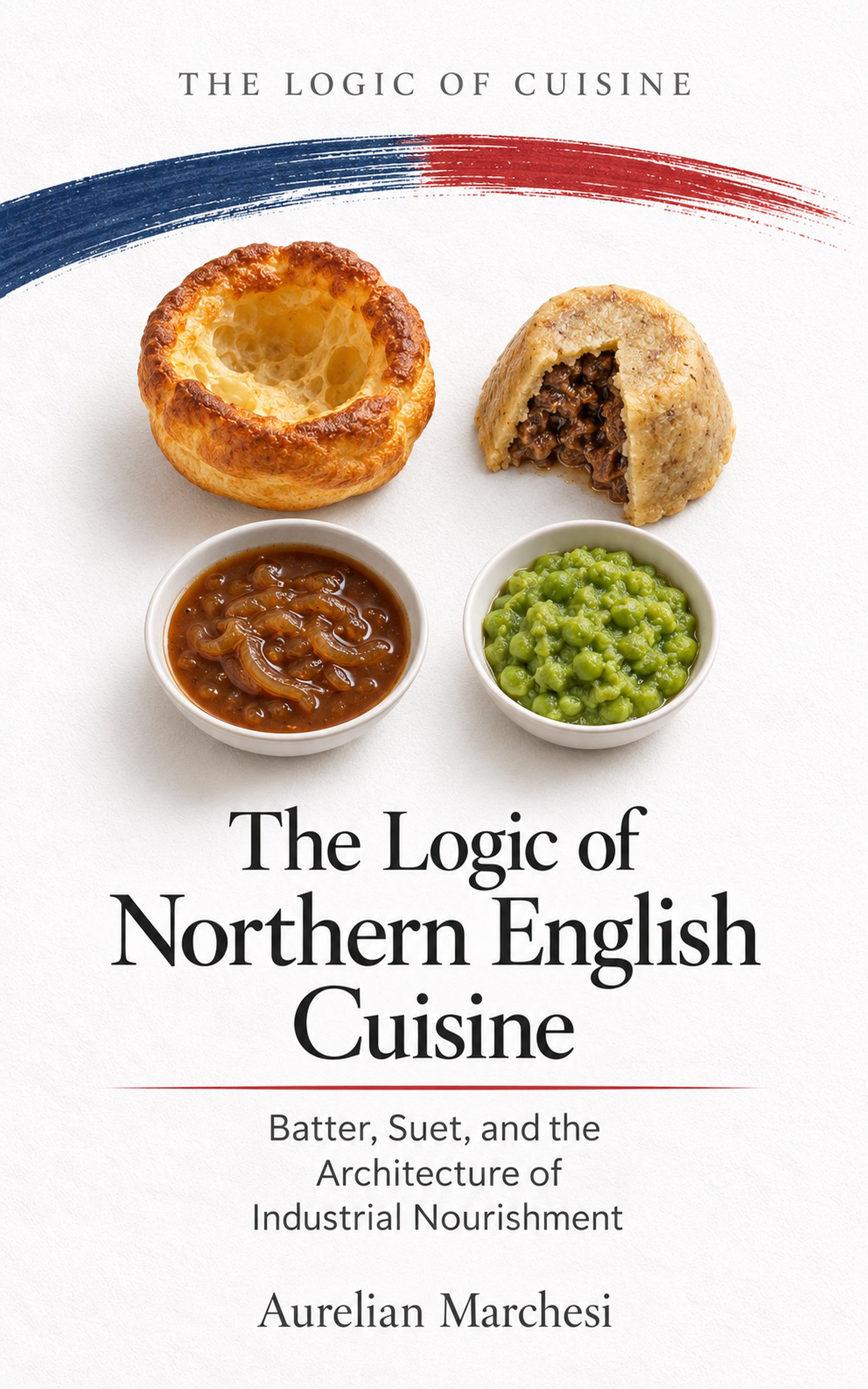
The book begins with bodies expected to work through cold, damp days and with kitchens required to feed them from materials cheaper and more repeatable than meat. That pressure changes the meaning of a substantial meal. Density must last, but it cannot disable the eater halfway through the day. Food must also tolerate delay: a roast, hotpot, pie, pudding, or stew may have to serve a household, canteen, pub, or late arrival across an extended window. The range and oven answer that demand by concentrating labor into shared heat and by favoring forms that hold warmth, moisture, and portionability. Industrial context is not used as scenery. It establishes the practical burden against which batter, suet, gravy, pulses, and potatoes acquire their roles.