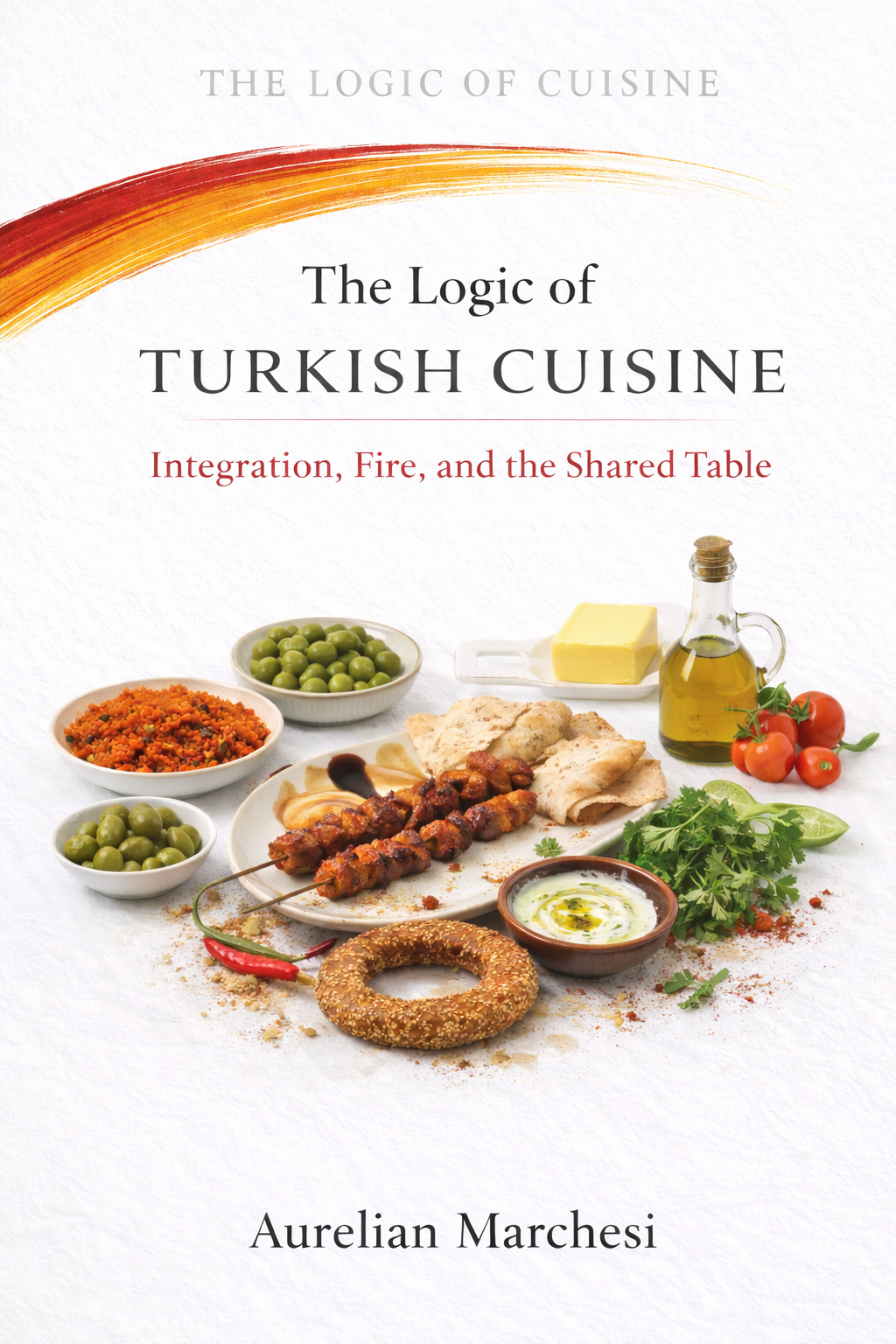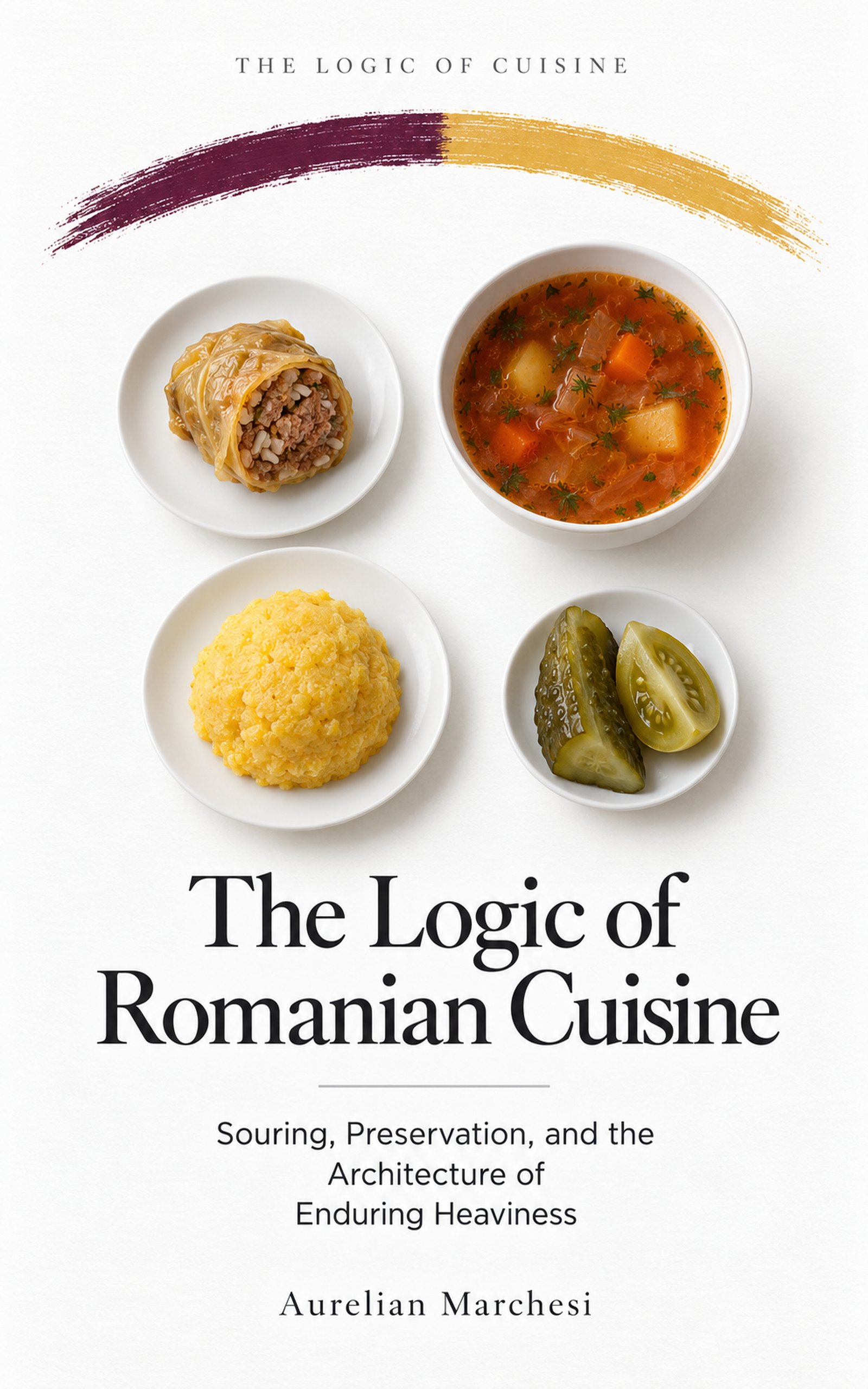
Cover of The Logic of Romanian Cuisine

Book 24 · The Logic of Cuisine

The Logic of Romanian Cuisine

Souring, Preservation, and the Architecture of Enduring Heaviness

By Aurelian Marchesi

Coming Soon

Romanian food is often described through heaviness or through a catalogue of influences. This volume asks a different question: what keeps density livable when cold seasons, storage, agrarian work, slaughter abundance, and the feast-fast calendar make concentrated food a recurring condition rather than an occasional indulgence? Its answer is an architecture of correction. Souring reopens appetite. Preservation converts short abundance into continuity but also increases intensity. Broth disperses that intensity. Bread, maize, potatoes, beans, and grain receive and steady it. Leaves enclose it; pickles and sharp elements interrupt it; the order of the meal places each force where it can do useful work. The book reads Romanian cuisine through these relationships, making weight intelligible as a governed system rather than as rustic excess.

The central question

How does Romanian cuisine make dense, preserved, agrarian food repeatable through souring, broth, enclosure, starch, and the timing of the table?

The volume proposes that Romanian culinary identity lies less in the origin of individual dishes than in the work they perform after entering a common pressure field. Dense ingredients and preserved forms remain central, but they are continually corrected, carried, anchored, and reset. Sour soup, cabbage brine, fermented media, pickles, broth, bread, mămăligă, leaves, dairy, herbs, and meal order are therefore structural participants rather than marginal accompaniments. A dish belongs to the system when its concentrated force becomes bearable across repeated eating. This grammar can remain visible through regional difference and adaptation abroad, provided the jobs of correction and distribution are not reduced to decoration.

What this work explores

Sourness performs correction

Sourness is treated as an active response to palate closure, not as a decorative preference. Dense, stored foods can remain physically available while repetition makes appetite withdraw. Romanian sour channels answer that problem at multiple scales: inside broths, through fermented cabbage or bran, in cultured dairy, and beside food as pickles or other sharp accompaniments. The exact carrier can change, but the job remains stable. Acid must be strong enough and properly placed to reopen the mouth against fat, smoke, starch, gelatin, and repetition. The manuscript therefore identifies sour correction, rather than any single sour ingredient, as an irreplaceable marker. Removing it leaves the materials in place but weakens the relationship that makes their density sustainable.
Preservation concentrates and extends

Preservation answers the volatility of seasons and slaughter by converting brief abundance into stored capability. Grain, beans, maize, cabbage, smoked meat, rendered fat, brine, dairy, and other durable forms let a household face winter and interrupted access. Yet preservation also intensifies. Smoke, salt, fat, gelatin, and fermentation return to daily cooking in concentrated forms. The book's argument therefore does not stop at survival. It follows what must happen when stored intensity re-enters the pot: broth must disperse it, starch must receive it, and sourness must create a path through it. Preservation is both security and the reason a correction system becomes necessary. That double role gives the pantry its place in the volume's architecture.

Enclosure regulates concentrated force

Sarmale provides the book's clearest model of contained density. Meat, rice, fat, leaf, sour medium, liquid, and slow heat must cooperate inside a repeatable unit. The leaf is not disposable packaging. It binds, seasons, meters moisture, standardizes portion, and places acid directly at the boundary of a rich filling. Grain expands within the core, absorbs rendered fat and sour liquid, and prevents the meat from becoming an isolated block. The surrounding pot continues the work by bathing each roll in active moisture and correction. This full reading turns enclosure into a way of regulating feast-scale richness across first serving, reheating, and the following day, rather than treating stuffed cabbage as a self-explanatory traditional object.

The table routes intensity

Balance appears not only inside dishes but in their position around the table. A hot, often sour liquid prepares and reopens. Meat, smoked food, beans, or a dense braise concentrates force. Bread, mămăligă, potatoes, or another starch waits underneath or beside it to absorb and spread fat, salt, and sauce. Pickles, raw onion, cultured dairy, or sharp vegetables remain within reach so correction can recur throughout the meal. The manuscript treats these as functional slots rather than formal etiquette. Soup first, starch beneath, and sourness beside are ways of controlling the speed and sequence with which density reaches the body. A table may vary regionally while retaining this architecture of carrying, anchoring, and reset.

Adaptation preserves jobs rather than labels

The volume's account of cooking abroad separates ingredient continuity from structural continuity. Imported products alone cannot guarantee a Romanian meal if sourness has become timid, pickles decorative, broth absent, and starch incidental. Conversely, unfamiliar local materials can preserve the grammar when they perform the old jobs honestly. A souring agent must stand up to richness. A broth must carry preserved intensity. A starch must catch and spread force. A supporting element must remember time through smoke, fermentation, or storage. This approach does not make every substitution equivalent. It demands that the cook identify what cannot be lost, then reassign those functions under a new pressure field rather than recreating a nostalgic inventory.

Density and correction across time

The book's framework starts from density as a chosen condition. Pork, dairy, beans, grain, cabbage, preserved foods, and long-cooked forms are not treated as errors to be lightened into another cuisine. The analytical task is to identify the corrections that let this density remain desirable across a meal, a week, and a winter. Sourness leads that work, but it acts with broth, starch, enclosure, herbs, raw sharpness, dairy, preservation, and the feast-fast rhythm. Balance is therefore temporal and architectural. It is measured by whether appetite can remain open and whether concentrated food can be encountered again without fatigue. This lens also clarifies cultural influence: origins may explain vocabulary, while the repeated jobs assigned to a dish explain how it functions inside Romanian grammar.

Inside the work

Establish pressure and correction

The opening movement dismantles borrowed-heaviness explanations, maps durable ingredients and transformation engines, and installs sour correction as the governing balance axis.

Read dishes and meals as systems

The middle movement tests the grammar through two structural dish ranges, full readings of sarmale and ciorbă de burtă, regional decision order, correction systems, meal architecture, and feast scale.

Defend the grammar under movement

The closing movement identifies distortions, tests which functions can be reassigned abroad, and compresses the cuisine into a recognition model of density, sourness, preservation, broth, and anchoring.

Place in the series

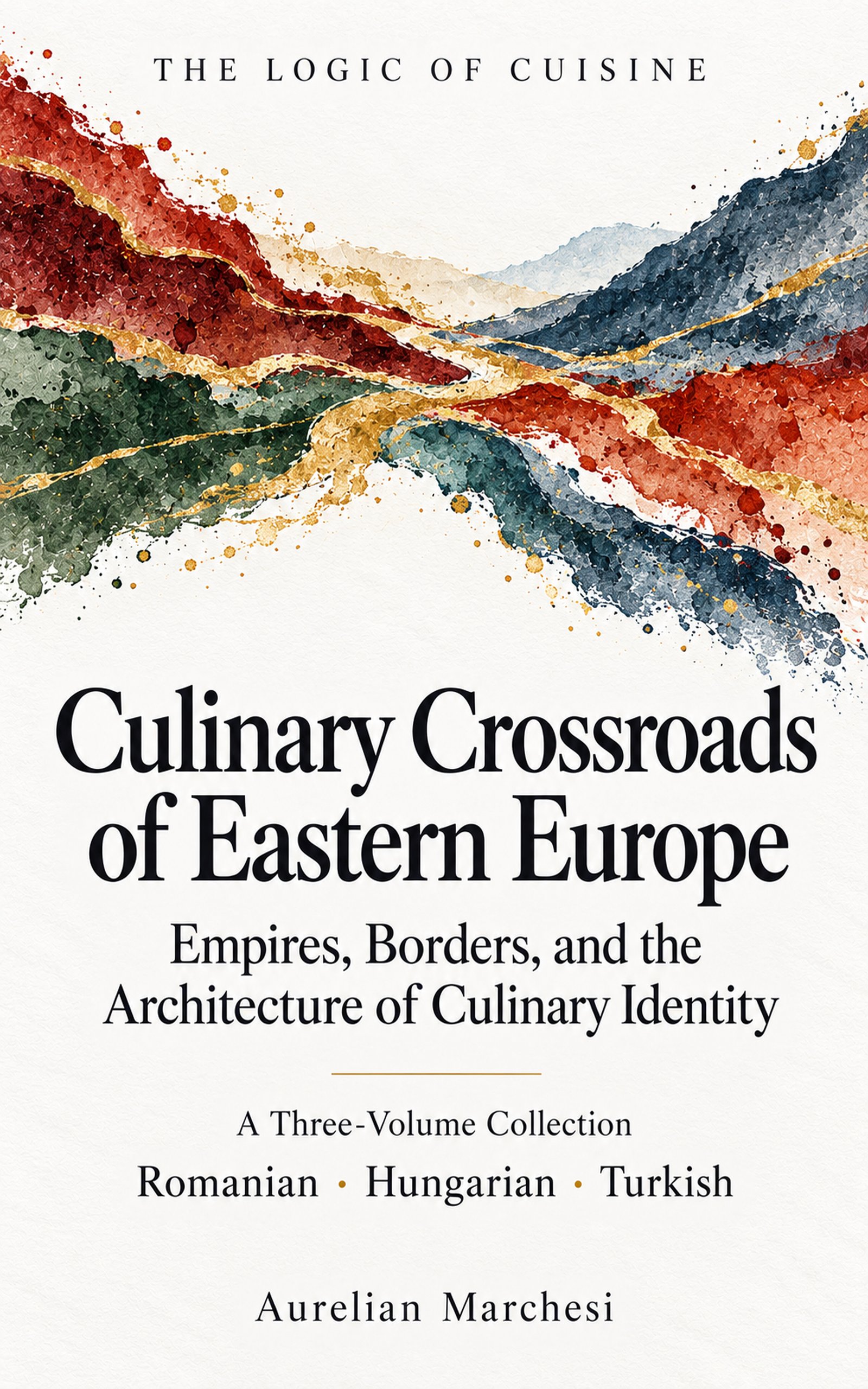
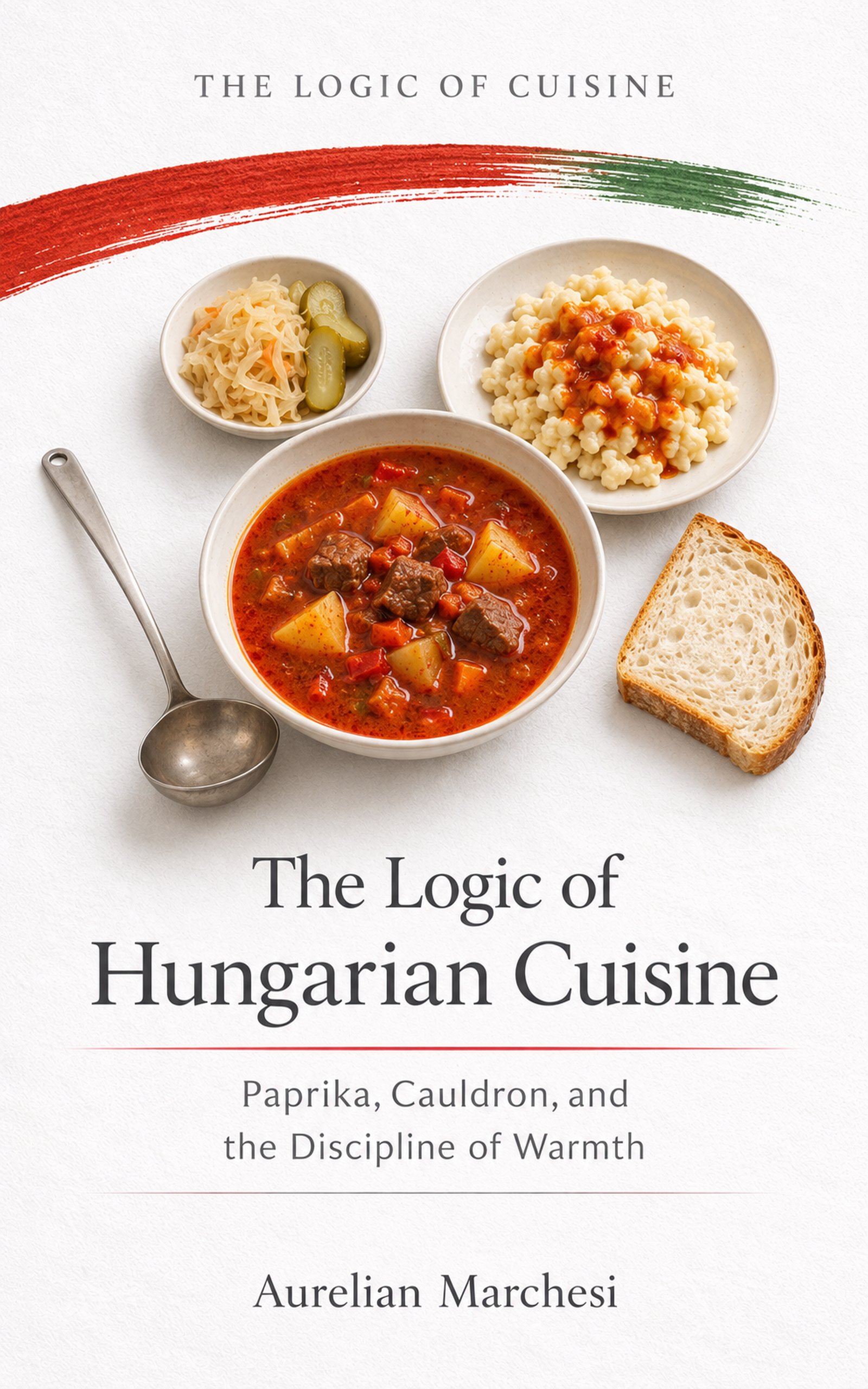
This volume extends The Logic of Cuisine by making correction itself the primary subject. Where other volumes may center restraint, heat, fermentation, or enclosure, the Romanian analysis follows what happens after dense and preserved food becomes unavoidable: how appetite is reopened, how force is dispersed, and how the table turns concentrated materials into continuity. Its relationship with the Hungarian and Turkish volumes is made explicit through Culinary Crossroads of Eastern Europe, but the book does not collapse their systems into a shared regional cuisine. Romanian identity remains bound to its own pattern of souring, broth, anchoring, enclosure, and feast-fast timing.