Primary form of continuity
Romanian continuity stores and corrects; Hungarian continuity concentrates and circulates warmth; Turkish continuity integrates varied forces across common bases and a shared table.
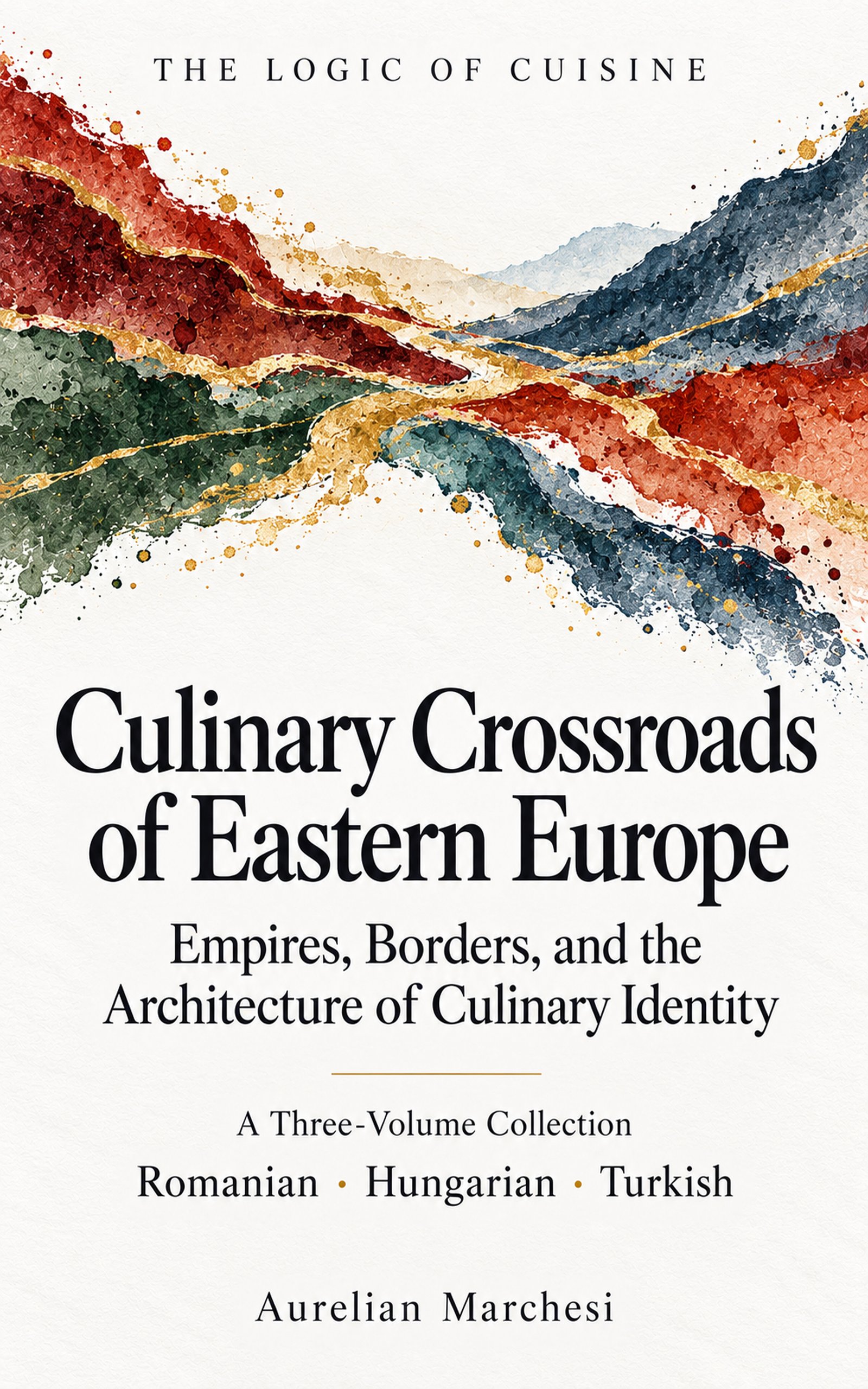
Collection 8 · The Logic of Cuisine
Empires, Borders, and the Architecture of Culinary Identity
By Aurelian Marchesi
A border may be redrawn before a kitchen changes its habits. Culinary Crossroads begins in that interval, where empires, migrations, seasons, and markets move materials while households decide what will be stored, repeated, corrected, or refused. Romanian, Hungarian, and Turkish cuisines share forms and historical contact, but the collection does not turn resemblance into a single origin. It asks instead how each system gives traveling ingredients and techniques a local job, and how repetition turns contact into identity without requiring purity.
The collection argues that culinary identity at a crossroads is disciplined continuity under contact. Romanian cuisine stores density and places sour correction beside it; Hungarian cuisine carries and distributes warmth through paprika, fat, onion, liquid, smoke, starch, and relief; Turkish cuisine integrates fire, bread, grains, vegetables, dairy, acid, and meze across a shared table. Similar stuffed leaves, stews, breads, preserves, dairy, or grilled meats do not erase these structures. A form becomes local through the supporting actors, sequence, social setting, and corrective mechanisms that surround it.
Volume 1
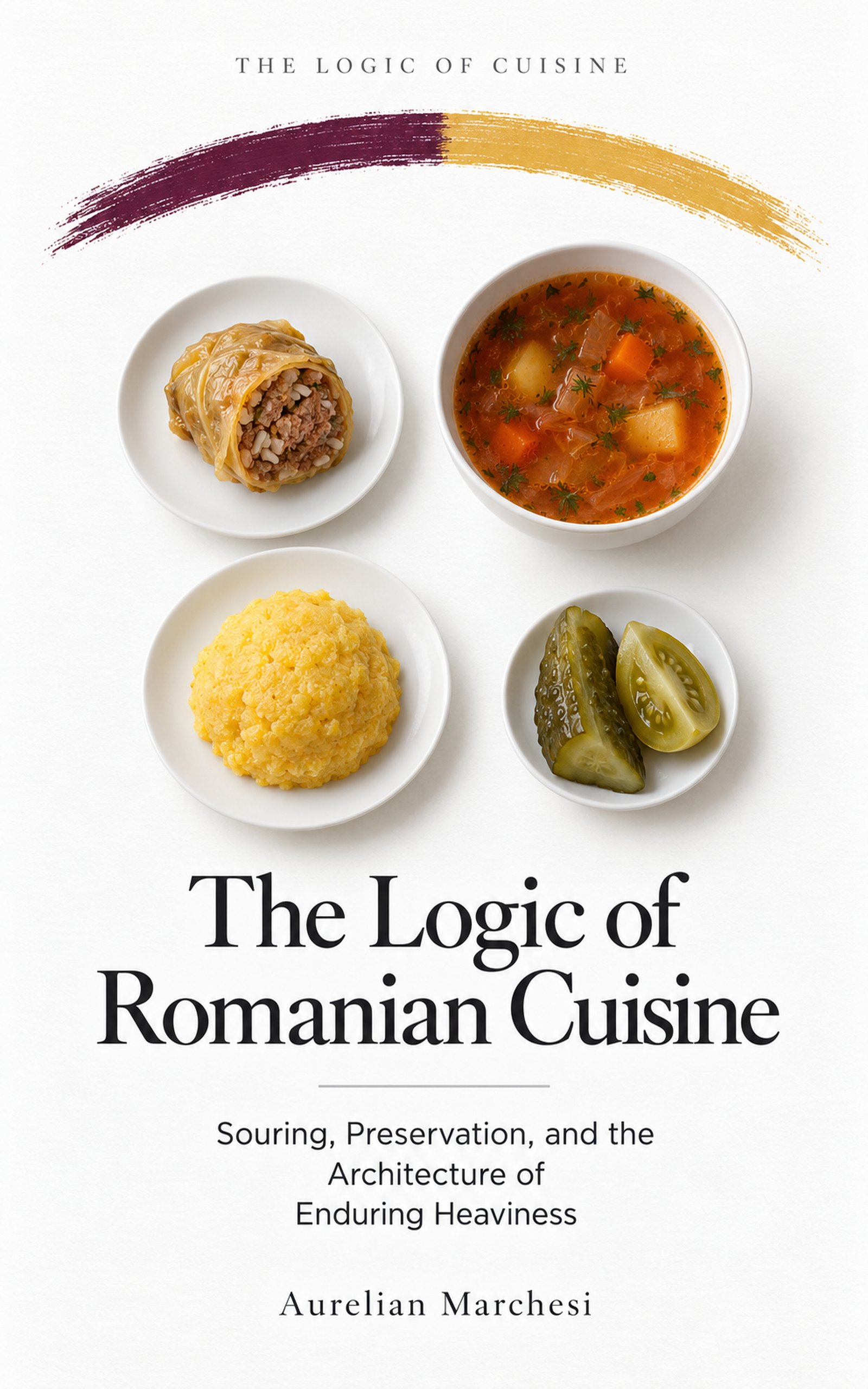
The Romanian volume opens in cellar and sour pot, showing how stored density, staple ballast, brine, herbs, and cultured acidity make endurance breathable.
The sequence shifts from the pairing of storage and sour correction to the active circulation of warmth through paprika, liquid, vessel, and starch.
Volume 2
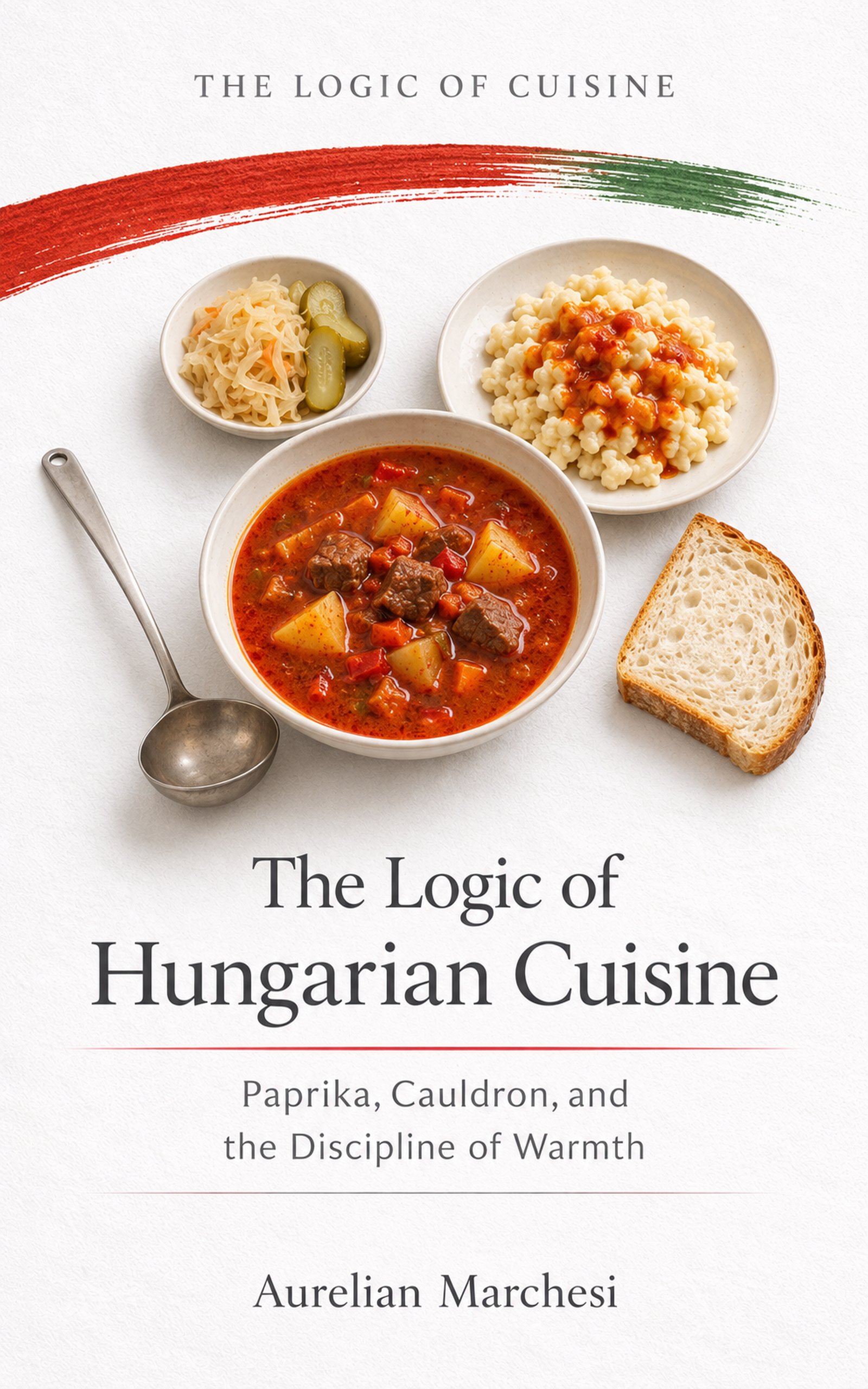
The Hungarian volume studies paprika and cauldron as instruments of distribution, concentrating flavor while sour cream, pickles, breads, noodles, bowls, and plates keep warmth differentiated.
From warmth carried within pot and plate, the collection widens toward a table where bread, vegetables, dairy, acid, fire, and small dishes share the work of integration.
Volume 3
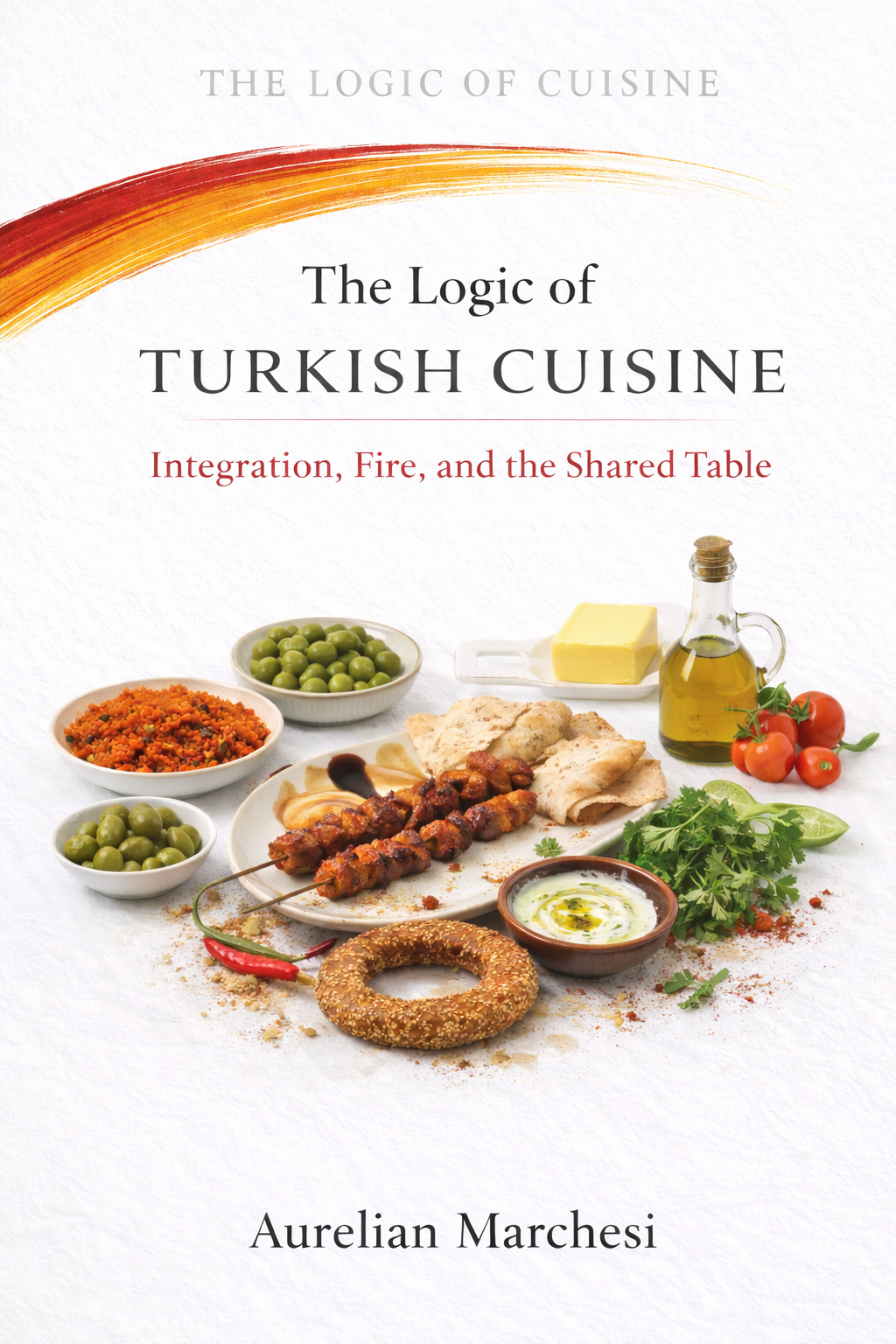
The Turkish volume completes the comparison through controlled fire and shared-table integration, making bread, grains, legumes, vegetables, yogurt, acid, and meze co-govern abundance.
Romanian continuity stores and corrects; Hungarian continuity concentrates and circulates warmth; Turkish continuity integrates varied forces across common bases and a shared table.
Sour broth, brine, and pickles; sour cream, liquid, and starch; yogurt, acid, herbs, and meze reveal different placements of relief around sustaining food.
The cellar and household pot, the cauldron and differentiated bowl or plate, and the bread-centered communal spread organize endurance at three different scales.
The order moves from survival by storing force and placing correction beside it, through warmth suspended and redistributed by vessel and medium, to integration achieved through bases, regulators, and communal pacing. It does not move from simple to complex or from one nation into another. Each step changes the scale at which continuity is seen: pantry and household, pot and plate, then the social field of the shared table.
Culinary Crossroads defines identity as a method of holding steady under movement, not as isolation from it. Empires and borders explain why materials and people circulate; culinary systems explain why similar forms perform different work once they arrive. By comparing correction, warmth, and integration, the collection makes contact visible without turning Romania, Hungary, and Turkey into one regional essence.
The Romanian volume treats winter continuity as a structure of grain, maize, cabbage, beans, roots, dairy, and preserved pork. That density is not denied; it is kept mobile by ciorbă, borș, brines, pickles, cultured dairy, garlic, and herbs. Sarmale and mămăligă belong to the same architecture as the sour pot and cellar because endurance requires both ballast and release. Romanian identity appears here not as an inventory of heavy foods but as a practiced relationship between storage and correction.
The Hungarian volume places paprika inside a sequence rather than on the surface as national color. Fat and onion prepare a carrier; pepper, liquid, smoke, cauldron, dumpling, bread, or noodle determine how concentration moves. Gulyás, pörkölt, paprikás, and halászlé show that bowls and plates assign different tasks to liquid and density, while sour cream and pickles restore contrast. The achievement is warmth held long enough to sustain, yet distributed widely enough to avoid a single monotonous red stew.
The Turkish volume makes plurality coherent through a field of relations. Bread serves as utensil, carrier, and common ground; grains and legumes provide volume; fire concentrates; yogurt and acid relieve; vegetables and meze extend the meal through time. Meat and smoke remain powerful without ruling every bite. The crossroads is therefore not a blur of influences but a social architecture able to receive difference and pace it among diners.
The collection reads shared forms through the work around them: what staple receives the dish, how preservation answers climate, where acid or dairy corrects density, how fire is paced, and whether food is organized around a bowl, plate, or shared spread. Political geography matters because it changes access and prestige, but resemblance alone cannot prove descent. The method therefore holds two facts together: contact is real, and the local grammar that repeats a form is more specific than the form's silhouette.
Within The Logic of Cuisine, this collection tests how structural analysis can address contested histories of movement without deciding ownership from resemblance alone. The component volumes remain independent accounts; together they reveal culinary identity as selective repetition under climate, preservation, empire, and shared eating. The collection's role is comparative: it sharpens the differences that a list of common dishes would conceal.