Where complexity is organized
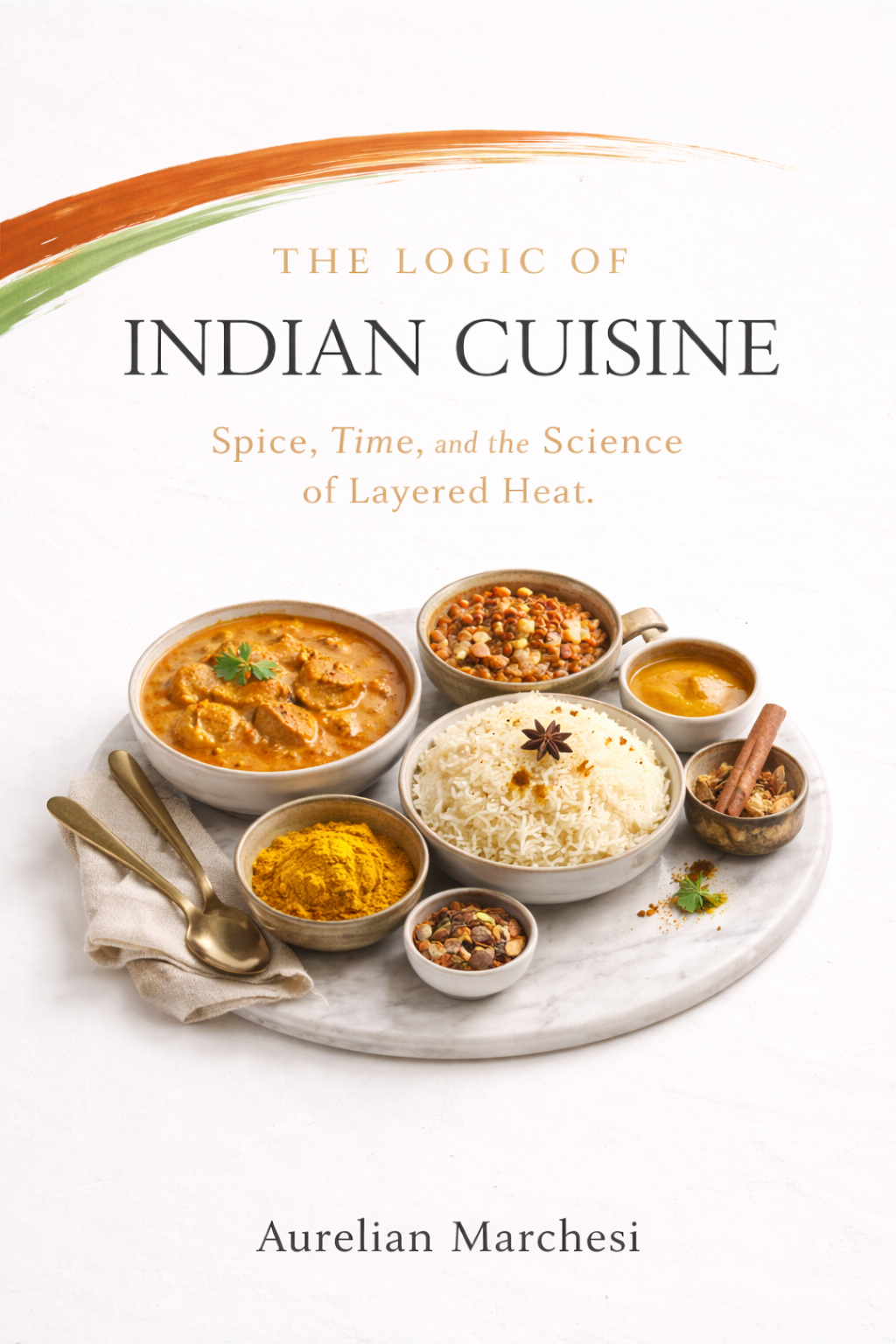
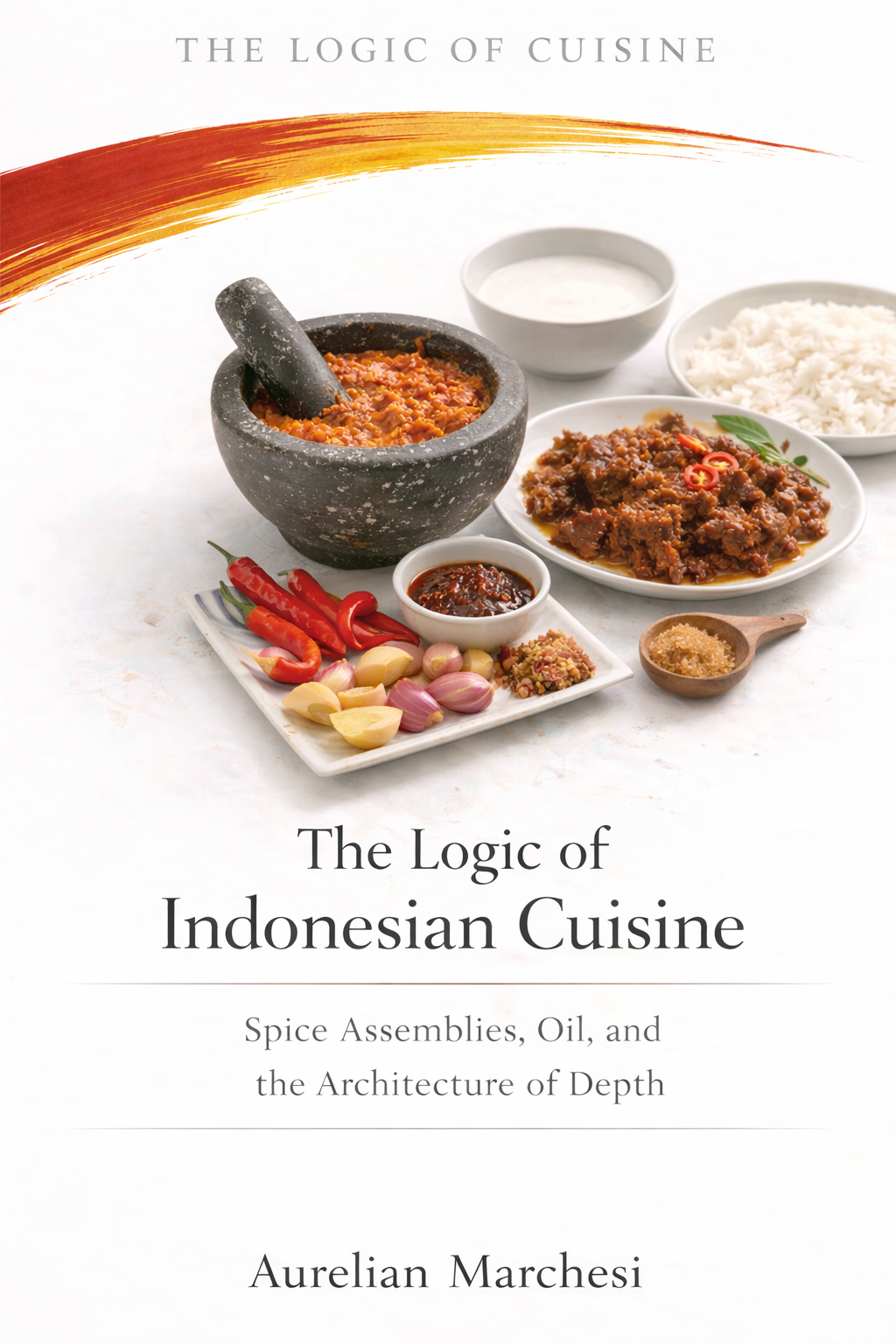
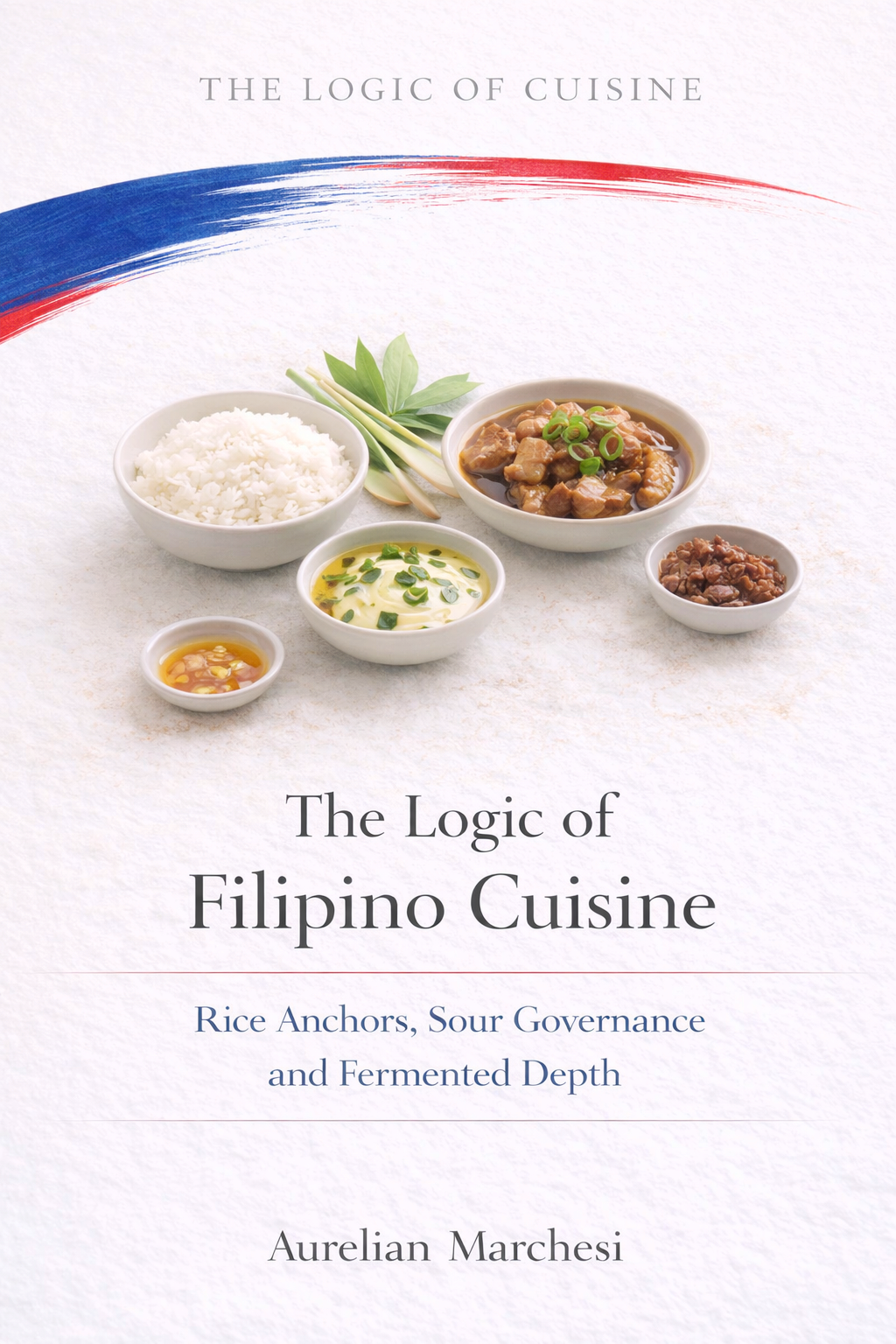
Indian sequence distributes work across cooking time; Indonesian pastes concentrate organization into a prepared foundation; Filipino anchoring coordinates strong elements through rice, sourness, broth, and table adjustment.
How fat and acid are governed
Fat blooms and sequences spice, translates paste into depth, or meets vinegar and sour broth as a counterforce; the contrast reveals three different controls on concentration.
What movement produces
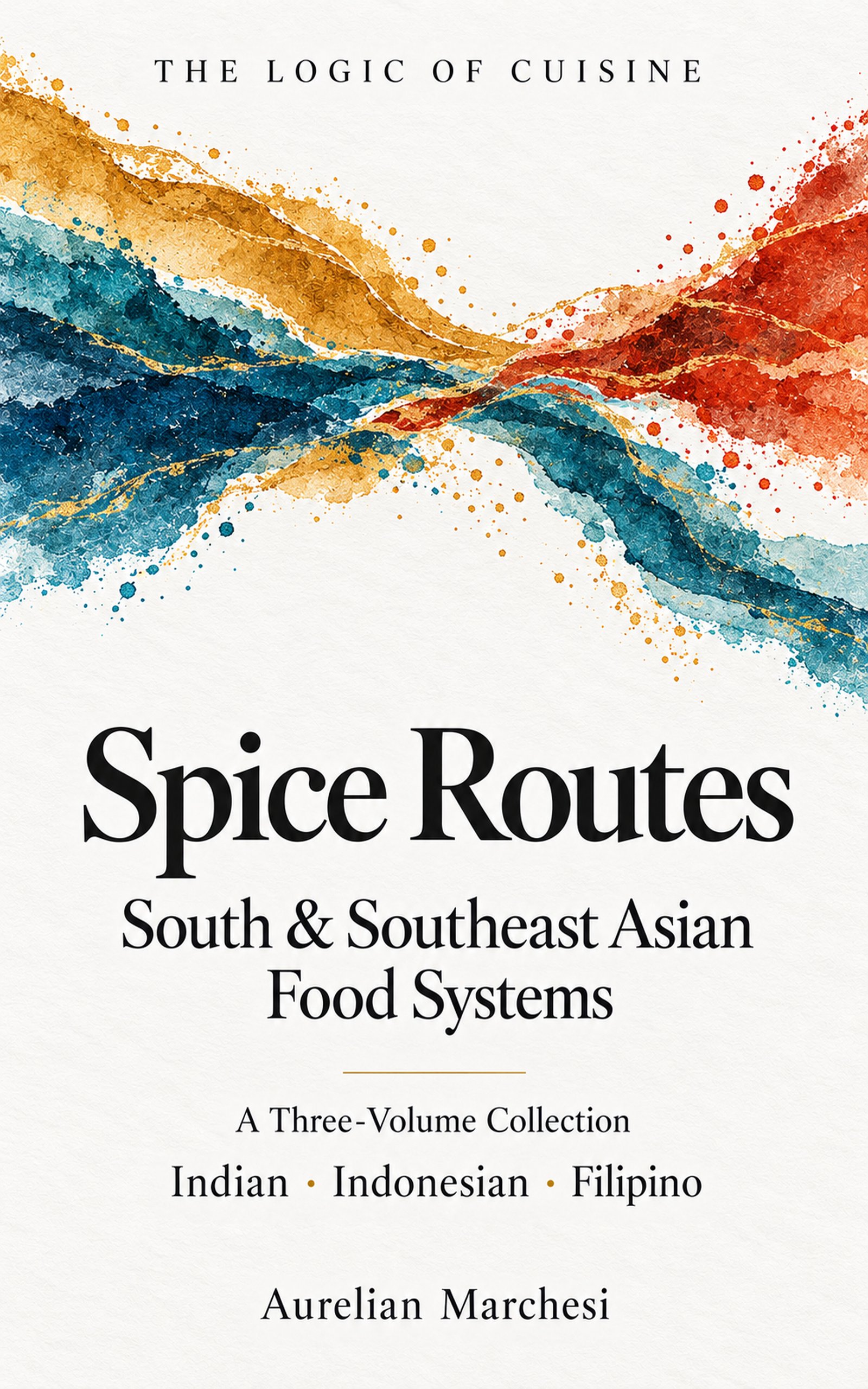
Across the three volumes, trade, colonization, migration, and ecological exchange supply materials and pressures, while local systems decide their timing, combinations, and social meaning.
The reading moves from layered time, to assembled depth, to anchored intensity. First, flavor is understood as a sequence of transformations. Next, the reader sees complexity composed into a foundation that heat can activate. Finally, attention turns to the staple, souring systems, broth, and communal table that receive and regulate force. The progression changes the analytic lens without ranking the cuisines or claiming direct descent among them.
Spice Routes proposes that movement becomes culinary form only through disciplined translation. Its comparative value lies not in proving that three cuisines share spices, but in showing how temporal layering, aromatic assembly, and staple-centered regulation produce distinct kinds of coherence. The route is plural because every receiving kitchen changes what has traveled.