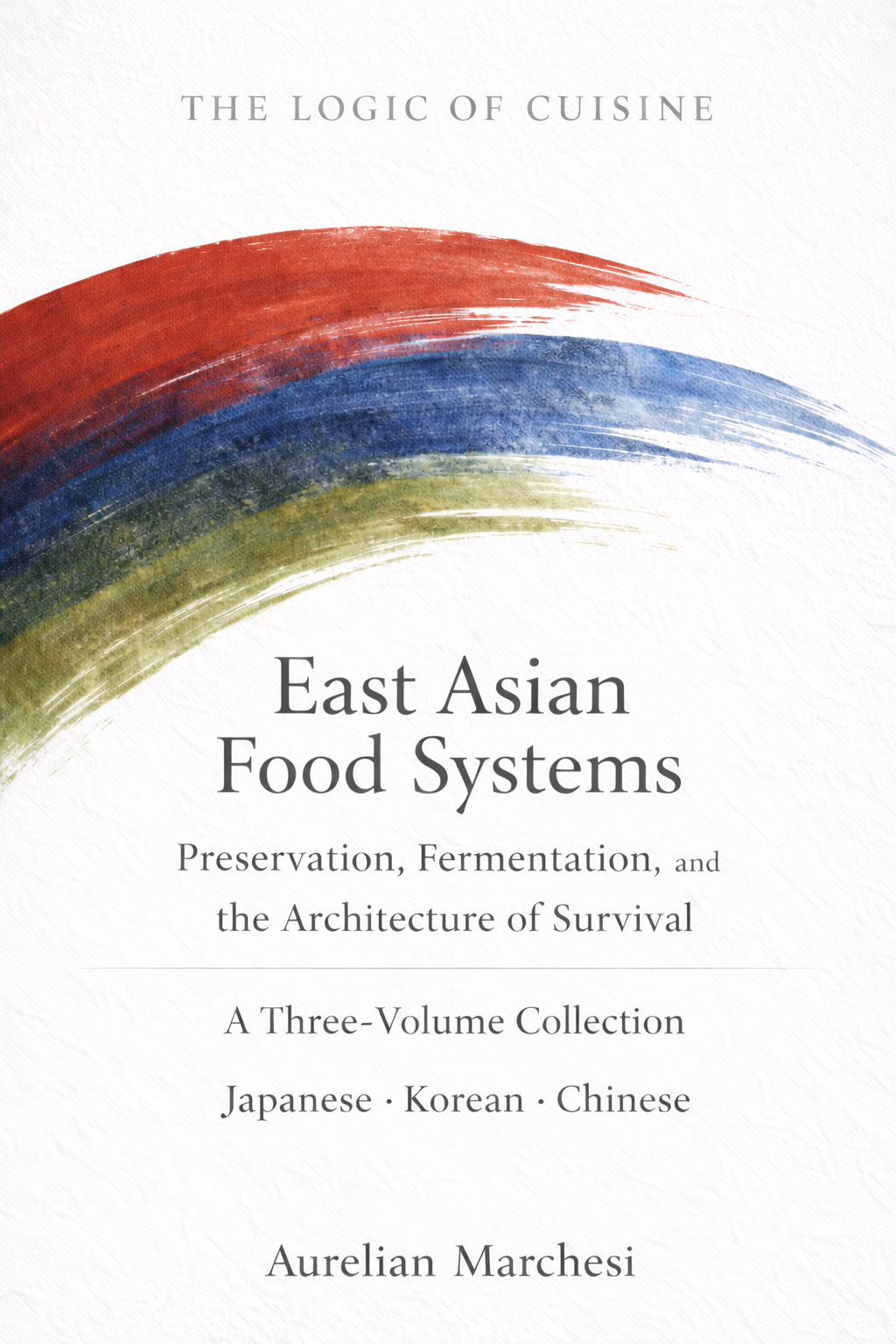
Cover of East Asian Food Systems

Collection 1 · The Logic of Cuisine

East Asian Food Systems

A Three-Volume Collection: Japanese · Korean · Chinese

By Aurelian Marchesi

East Asian Food Systems brings three independent volumes into one comparative reading. The collection does not propose a single East Asian cuisine, nor does it treat Japanese, Korean, and Chinese food as interchangeable variations. It begins from a narrower question: how do distinct culinary systems organize preservation, depth, staple foods, heat, and the table when nourishment must survive time and pressure without collapsing into excess? Japanese clarity and controlled intervention, Korean stored time and modular balance, and Chinese governed heat and shared abundance provide different answers. Read in sequence, the volumes allow relationships to appear without erasing the conditions, materials, and social forms that make each answer its own. The collection's subject is the usefulness and the limit of comparison itself.

The collection thesis

The collection argues that related pressures can produce structurally comparable solutions without producing the same cuisine. Across the three volumes, fermentation directs change through time, broths and sauces carry depth, rice or other staples stabilize intensity, and heat is disciplined by the role it must perform. The comparative value lies in the differences: Japanese cuisine protects clarity and identity through measured intervention; Korean cuisine builds continuity through fermentation, anchoring, and a modular table; Chinese cuisine coordinates abundance through cutting, wok heat, sauce, staple contrast, and shared dishes. The collection treats those systems as parallel architectures of endurance, not as evidence of one uniform cultural grammar.

The three-volume progression

  1. Volume 1

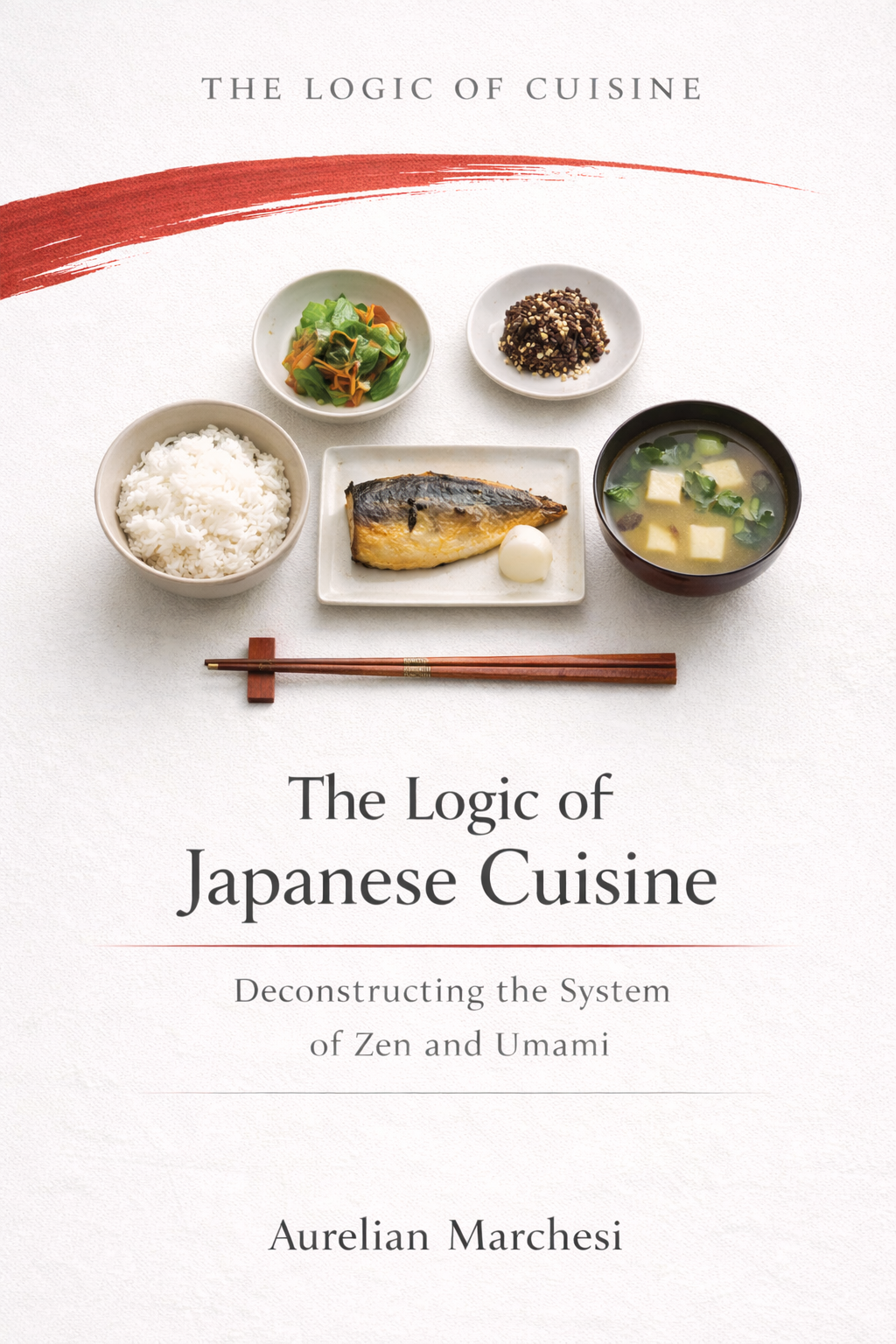
    Cover of The Logic of Japanese Cuisine

    The Logic of Japanese Cuisine

    Deconstructing the System of Zen and Umami

    The Japanese volume opens the sequence by examining clarity, extraction, seasonality, precision, minimal intervention, and guardianship. Dashi, rice, pantry ferments, cut, and controlled heat show a system in which depth does not require visual or sensory saturation.

    The sequence then moves from depth protected by clarity and measured intervention to depth accumulated through stored time, fermented bases, and a table built from coordinated modules.

  2. Volume 2

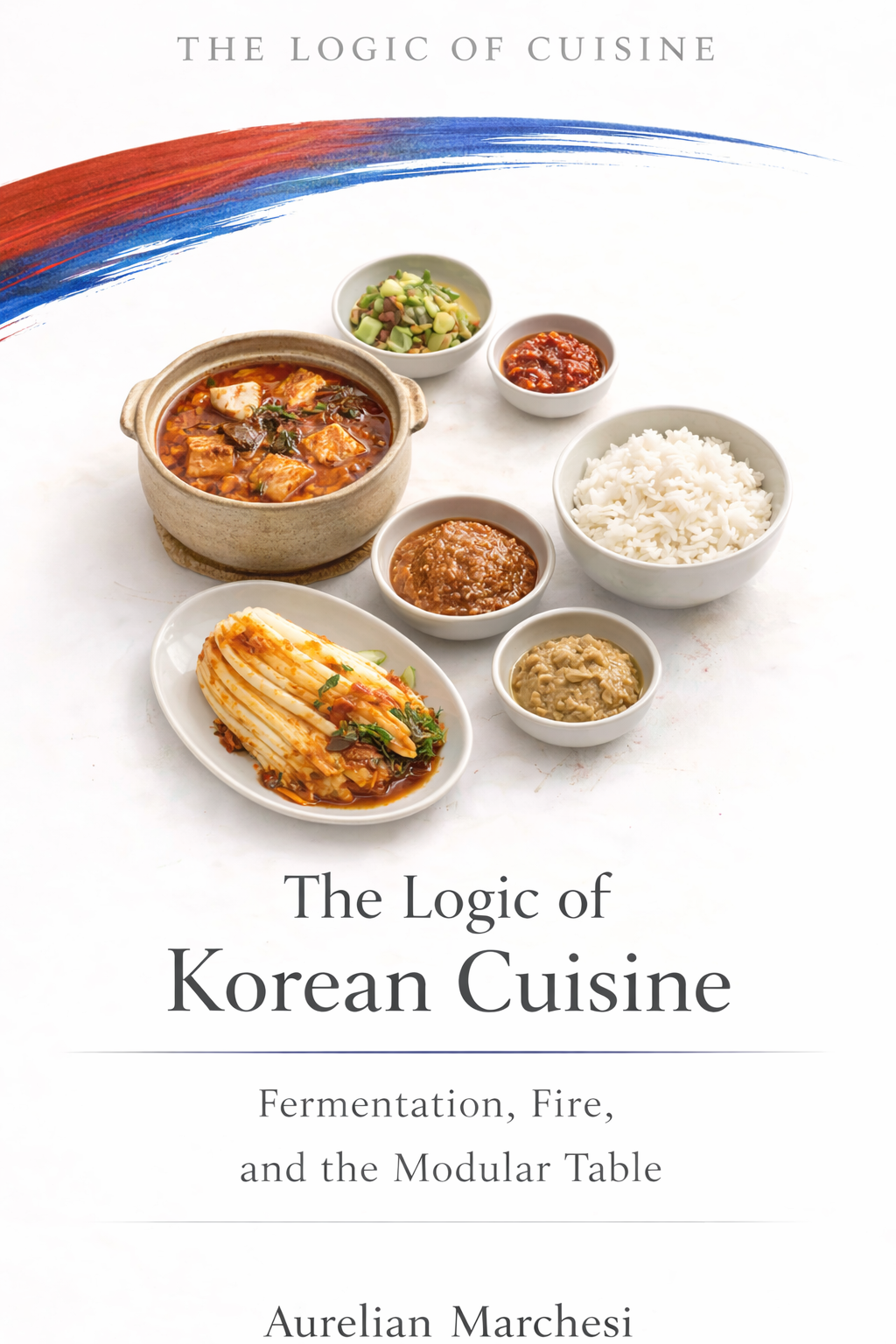
    Cover of The Logic of Korean Cuisine

    The Logic of Korean Cuisine

    Fermentation, Fire, and the Modular Table

    The Korean volume makes time and modularity explicit. Fermentation directs change rather than stopping it; jang and kimchi carry stored depth; rice and soup anchor intensity; banchan distributes contrast, continuity, and shared choice across the table.

    The final movement retains stored time and table coordination but shifts toward rapid heat, cutting, sauce, regional variation, and abundance governed through shared-dish geometry.

  3. Volume 3

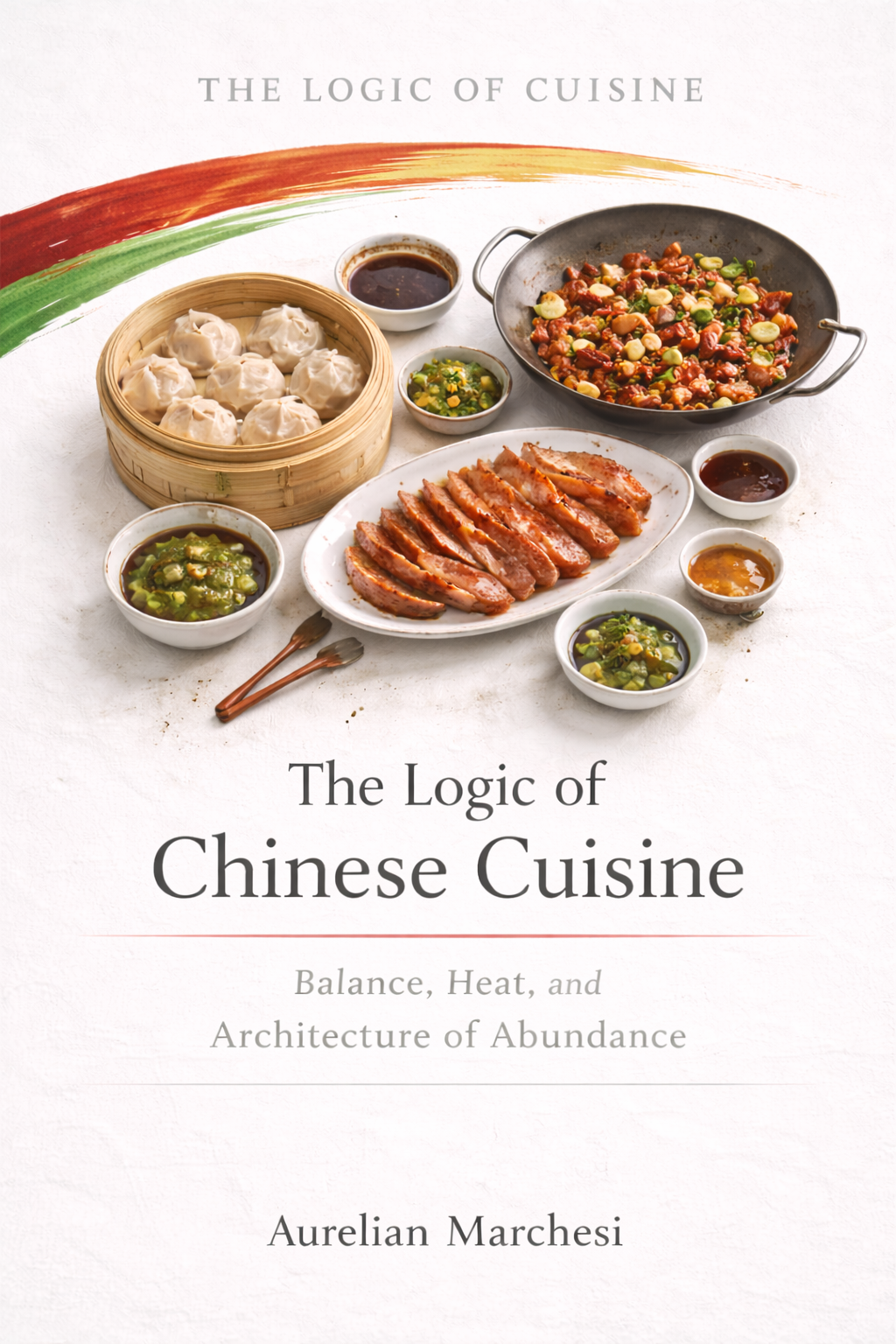
    Cover of The Logic of Chinese Cuisine

    The Logic of Chinese Cuisine

    Balance, Heat, and the Architecture of Abundance

    The Chinese volume completes the sequence through balance under abundance. Pantry infrastructure, cutting, wok heat, sauce, vegetable timing, rice and wheat, regional systems, and a shared table coordinate many strong elements without requiring them to collapse into one texture or flavor.

Comparative framework

Fermentation and preservation

All three volumes treat time as something cuisine can direct, but the collection distinguishes pantry modularity and clear extraction, household fermentation and stored depth, and a broad infrastructure of fermented, dried, pickled, and sauced abundance.

Carriers of depth

Dashi, soups and stews built on fermented bases, and Chinese sauces or broths show three different relationships among water, concentration, fat, solids, viscosity, and the ingredient being carried.

Staples and table stability

Rice and wheat are read by the role they play in calming, receiving, sequencing, and distributing other elements, from the Japanese bowl to the Korean rice-soup anchor and the Chinese contrast between quiet staples and shared dishes.

Heat and intervention

Minimal intervention, stone-pot holding and thin-pan immediacy, and wok-governed speed reveal distinct ways of matching energy to ingredient identity, fermented bases, texture, and the timing of service.

The ordered sequence moves from a system that protects clarity through extraction, seasonality, and controlled intervention; to one that makes stored time, fermentation, anchors, and modularity visible at the table; and finally to one that governs abundance through cutting, heat, sauce, staple contrast, regional variation, and shared-dish coordination. This is not a ladder of increasing complexity. Each volume contains its own full system. The progression changes the reader's angle of comparison, allowing depth to be recognized first as clarity, then as accumulated time, and then as coordinated multiplicity.

At collection scale, the distinctive proposition is that structural resemblance becomes more useful when it is separated from cultural sameness. Fermentation, broth, rice, and controlled heat can serve as comparative axes because each volume gives them a different position, purpose, and relation to the table. The collection therefore teaches a method of reading across cuisines: identify the pressure and the culinary role, then examine the local system that makes the solution specific. Its comparative contribution is to reveal parallel forms of culinary intelligence while making each system's distinct arrangement easier to see.
What this collection explores

Time is made useful in different ways

Fermentation and preservation recur across the collection, but they do not carry one identical meaning. In the Japanese volume, fermented pantry elements and dashi support clarity, modular seasoning, and controlled extraction. In the Korean volume, fermentation becomes a household system for holding seasons, building jang, kimchi, acidity, and depth before the meal is assembled. In the Chinese volume, fermentation, drying, pickling, sauces, pastes, and aged acids form an infrastructure that stores intensity and makes abundance manageable. The collection therefore compares time as an active culinary material while preserving the different vessels, rhythms, flavor structures, and table roles through which that material enters each cuisine.

Depth needs a carrier

The three systems do not locate depth in the same place. Japanese dashi is an invisible beam built through extraction, clarity, and careful limits. Korean soups and stews activate fermented bases while rice and broth provide anchors that make intensity ordinary. Chinese sauces bind aromatics, liquid, viscosity, oil, heat, and ingredient surfaces, while clear soups and braises demonstrate other ways of carrying force. The collection uses these differences to move beyond a simple claim that broth replaces fat. Its deeper comparative question is how flavor becomes mobile: what receives it, what keeps it attached to food, and what prevents concentration from becoming mud, flatness, or uncontrolled heaviness.

Staples stabilize the surrounding system

Rice appears throughout the collection as more than a neutral background, yet each volume assigns it a different relation to the rest of the meal. The Japanese volume presents rice as a center of gravity around which soup, plants, pickles, and other elements maintain definition. The Korean volume joins rice and soup as anchors for fermented, spicy, grilled, and braised foods, with the modular table controlling intensity through alternation. The Chinese volume places rice within a broader rice-and-wheat infrastructure and a shared table whose dishes vary in texture, liquid, and force. Comparison shows that a staple can calm, distribute, sequence, and socially organize a meal without performing exactly the same cultural work in every system.

Heat is governed rather than celebrated alone

Heat provides another comparative axis because each volume treats it as a controlled instrument. Japanese minimal intervention protects identity by matching duration and intensity to the material. Korean stone pots, thin pans, simmering, boiling, grilling, and fermented bases create a movement between holding and activation; chile heat is placed within a larger system that includes a way back to calm. Chinese wok logic makes speed, cutting, sequence, sauce, and immediate service interdependent, while braises and soups reveal slower registers inside the same cuisine. The collection's common ground is not a single heat level. It is the refusal to treat heat as undifferentiated force detached from timing, vessel, texture, and table role.

Comparison by culinary role

The collection compares roles rather than matching dishes. It asks how each cuisine stores time, creates depth, stabilizes intensity, governs heat, and distributes food across a table. That method reveals meaningful parallels while preventing a shared ingredient or technique from being mistaken for a shared identity. Fermentation may preserve and concentrate in all three volumes, but it enters different pantry systems and meal rhythms. Rice may anchor all three, but it organizes different relations among soup, side dishes, sauces, vegetables, proteins, and shared plates. The framework therefore requires two movements at once: identify the structural problem that makes comparison useful, then return to the local arrangement that makes each solution distinct. Comparison succeeds only when it increases resolution rather than smoothing differences away.

Place in the series

This collection makes the comparative ambition of The Logic of Cuisine explicit. The individual volumes ask how a particular cuisine holds together. The collection asks what can be learned when those internal systems are placed beside one another without turning geography into a single category. Its canonical order - Japanese, Korean, Chinese - supports a reading that moves through clarity, stored time, and coordinated abundance, while every component remains available as an independent argument. The collection thus occupies a different editorial role from the books it contains: it is a study in how the series' systems vocabulary can connect works without replacing their distinct identities.